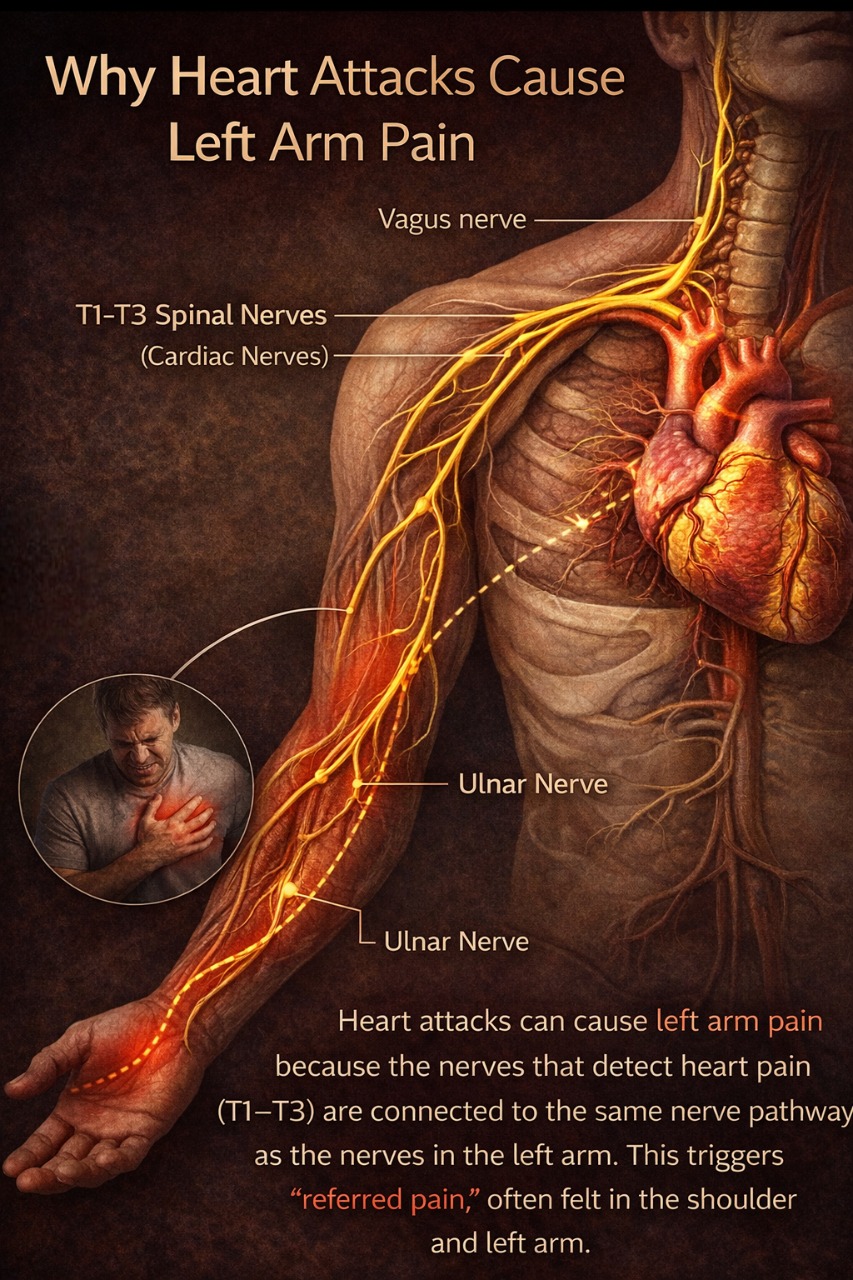
Left arm pain in a heart attack happens because heart and arm nerves share pathways, so the brain mistakes heart pain as coming from the arm. Call emergency services for chest pain with arm pain.
Why
Referred pain: nerves from the heart and left arm enter the spinal cord at similar levels, so the brain misreads heart pain as coming from the arm.
Other signs
- Chest pressure.
- Shortness of breath.
- Sweating.
- Nausea.
- Jaw or back pain.
Women
May have fatigue and nausea without chest pain.
Emergency
Call 911 right away.

Don’t
Drive yourself.
Pain referral explained
During a heart attack, damage to heart muscle sends pain signals through the same spinal nerves that serve the left arm, neck and jaw, so the brain interprets the pain as coming from those areas. This is called referred pain.
- Classic heart attack symptoms include chest pressure or tightness, pain spreading to the arm, shoulder, jaw or back, shortness of breath, cold sweat and nausea.
- Women, older adults and people with diabetes are more likely to have atypical symptoms, such as fatigue, shortness of breath, nausea or back or jaw pain without chest pain.
- About 805,000 Americans have a heart attack each year, per the CDC.
What to do
Call 911 right away for suspected heart attack. Do not drive yourself. If advised by the dispatcher and not allergic, chew one regular aspirin (325 mg) while waiting. Time matters, as treatment within the first hours saves heart muscle. Left arm pain alone without other symptoms is more commonly from muscle or nerve problems, but when in doubt, seek emergency help.
Pain referral explained
During a heart attack, signals from the heart travel along nerves that enter the spinal cord at the same levels as nerves from the left arm, so the brain may perceive pain in the arm, jaw or back. Women may experience nausea, fatigue and shortness of breath more often.
What to do
Call 911 immediately for chest pressure, arm pain, sweating or breathlessness. Chew aspirin 325 mg if advised by dispatch and not allergic. Do not drive yourself.
Women and atypical symptoms
Classic symptoms of heart attack are chest pressure, left arm pain, sweating and breathlessness. Women, older adults and people with diabetes more often have atypical symptoms such as fatigue, nausea, back or jaw pain and shortness of breath without chest pain. About 1 in 5 heart attacks are silent.

Emergency actions
Call 911 and do not drive yourself. Chew a regular 325 mg aspirin if not allergic and told to do so by a dispatcher. Time matters: the goal is to open the artery within 90 minutes of arrival. About 805,000 Americans have a heart attack each year, according to the CDC. Left arm pain that arises with exercise and settles with rest may be angina.
Based on data from the American Heart Association and the CDC