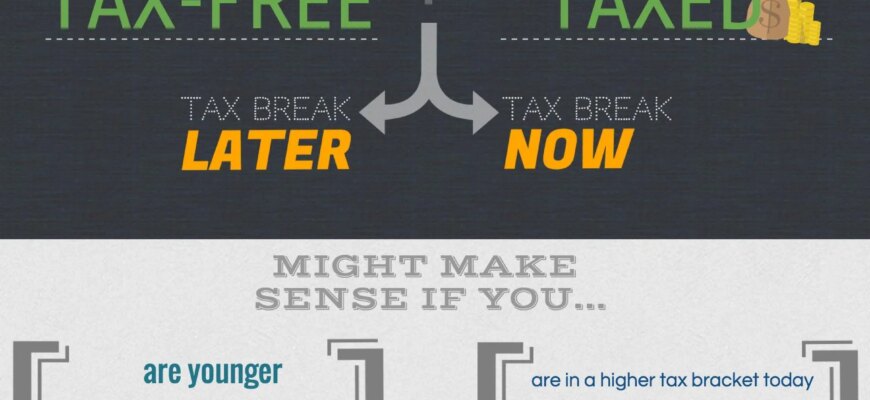
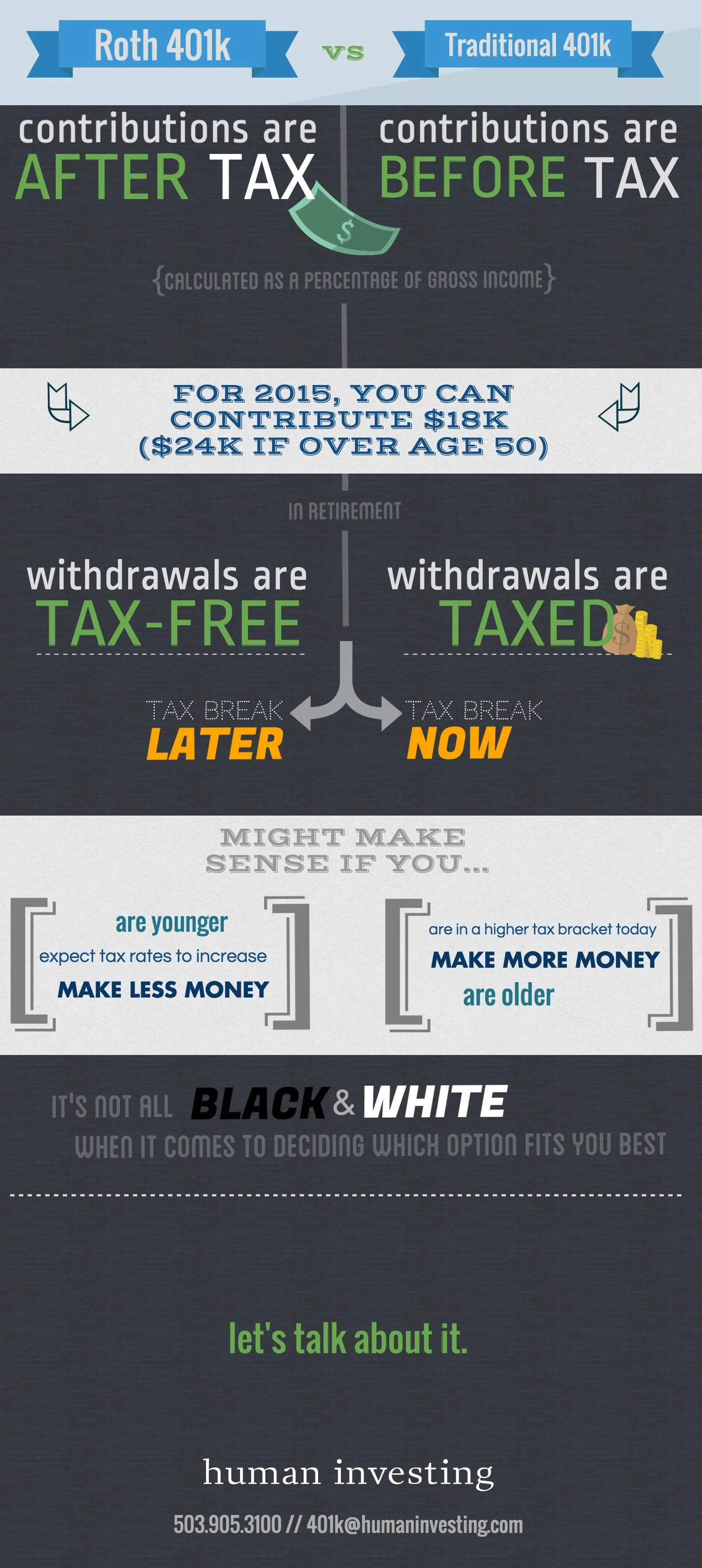
A traditional 401(k) uses pre-tax contributions and taxes withdrawals, while a Roth 401(k) uses after-tax contributions and withdrawals in retirement are tax-free.
Traditional 401(k)
- Contributions are pre-tax.
- Withdrawals in retirement are taxed.
- Required minimum distributions at age 73.
Roth 401(k)
- Contributions are after tax.
- Qualified withdrawals are tax free.
- Same contribution limit.
2025 limit
$23,500, plus $7,500 if you’re 50 or older.
Employer match
Can go to a pre-tax account, depending on the plan.
Choose
Traditional if you expect a lower tax rate later. Roth if higher.
Tax treatment
Contributions to a traditional 401(k) are made pretax, which lowers taxable income now, and withdrawals in retirement are taxed as ordinary income. Roth 401(k) contributions are made with after-tax dollars, and qualified withdrawals (after age 59 and a half and at least 5 years after the first contribution) are tax-free, including earnings.
- Both types share the same 2025 employee deferral limit of 23,500 USD in total, so you cannot contribute 23,500 to each.
- Employer matching contributions go into a traditional pre-tax account, though SECURE 2.0 lets plans offer Roth matches.
- Since 2024, Roth 401(k) accounts are not subject to required minimum distributions during the owner’s life.

Choosing
A Roth tends to suit those expecting higher tax rates in retirement, such as younger workers. Traditional suits those who want a tax break now at a higher bracket. Many people split contributions to diversify tax exposure. Roth IRAs have income limits, but Roth 401(k)s do not. This is general information, not financial advice.
Tax treatment
Traditional 401(k) contributions are pre tax, grow tax deferred and are taxed on withdrawal. Roth 401(k) contributions are made after tax and qualified withdrawals are tax free if you are over 59 and a half and the account is at least five years old. Both have the same 23,500 USD limit for 2025.
Choosing
Roth may favor those expecting higher taxes in retirement or younger workers. Traditional may favor high earners in peak earning years. Employer match goes to a pre tax account. Many split contributions.
Taxes today versus later
With a traditional 401(k) a 1,000 USD contribution reduces taxable income now; with Roth you pay tax now and withdraw tax free. If you are in the 24 percent bracket now and expect 12 percent in retirement, traditional wins; if you expect higher rates, Roth wins. The SECURE 2.0 Act (2022) allows employer matches to be put in Roth accounts from 2023 and eliminates RMDs for Roth 401(k) starting in 2024.

Strategy
Many people split. Roth gives flexibility with no income limit for 401(k) contributions, unlike Roth IRAs. High earners may use the mega backdoor Roth if the plan allows after tax contributions. Check plan rules and fees.
Based on data from the Internal Revenue Service