The Cold War ended because the Soviet Union’s economy faltered, reforms like glasnost and perestroika spread, and the USSR dissolved in 1991.
Main reasons
- The Soviet economy stagnated and lacked consumer goods.
- Mikhail Gorbachev’s reforms: glasnost (openness) and perestroika (restructuring).
- Eastern European revolutions in 1989.
- Costly arms race with the US.
- Nationalist movements within the USSR.
Key events
The Berlin Wall fell on November 9, 1989. The USSR dissolved on December 26, 1991.
Legacy
It ended a 45 year standoff.
Economic pressure
The Soviet economy struggled with central planning, low productivity, shortages and the cost of military spending, which was estimated at 15% to 25% of GDP. The falling price of oil in the 1980s cut hard currency earnings.
Arms race and technology
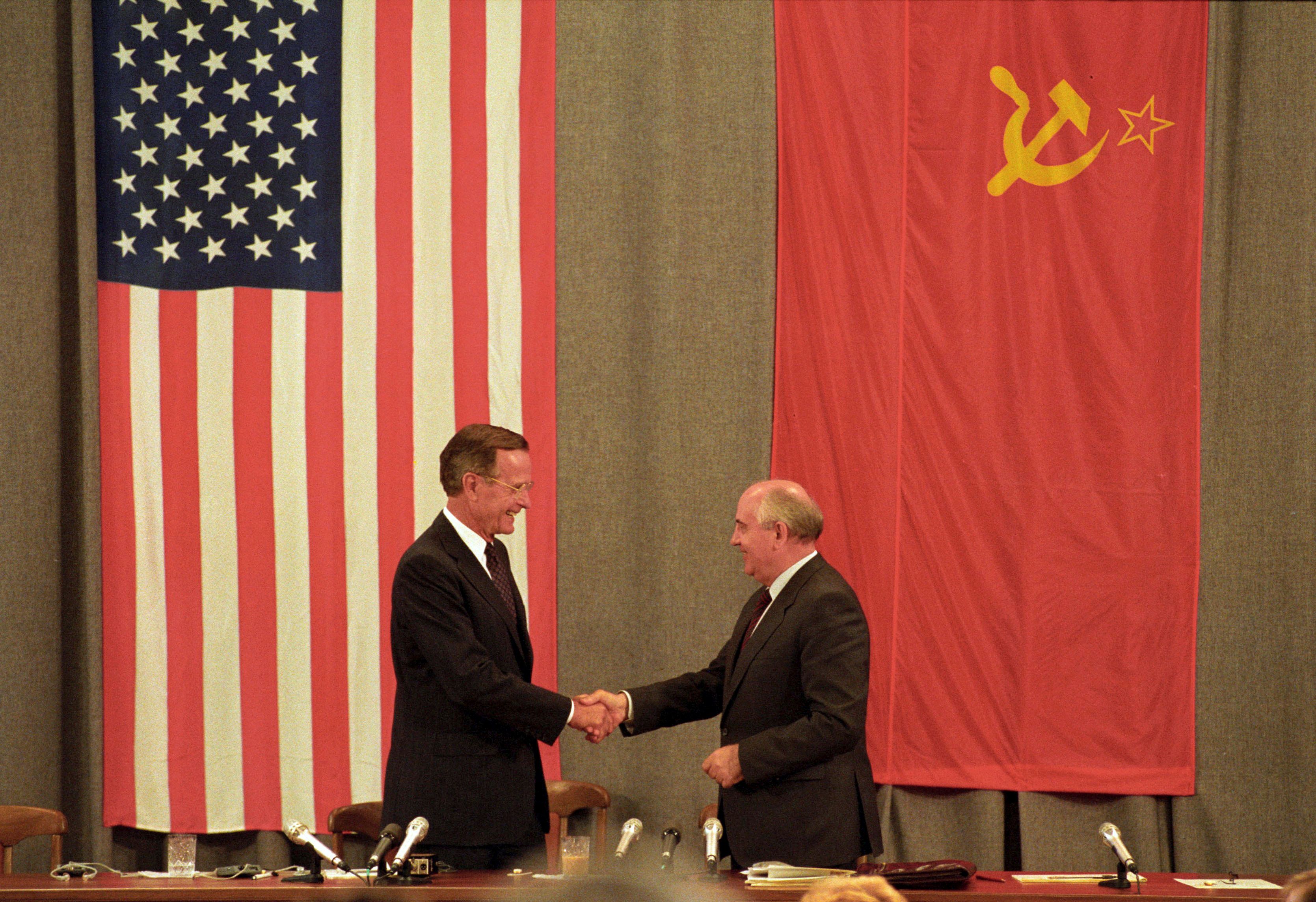
President Reagan’s military buildup, including the Strategic Defense Initiative (announced 1983), challenged Soviet capacity to keep up.
Gorbachev’s reforms
Mikhail Gorbachev became General Secretary in 1985. His policies of glasnost (openness) and perestroika (restructuring) loosened controls but also exposed problems and encouraged demands for change. He also reduced military confrontation, signing the Intermediate-Range Nuclear Forces Treaty with Reagan in 1987.
Afghanistan
The Soviet war in Afghanistan (1979 to 1989) cost about 15,000 Soviet lives and strained resources and morale.
Eastern Europe
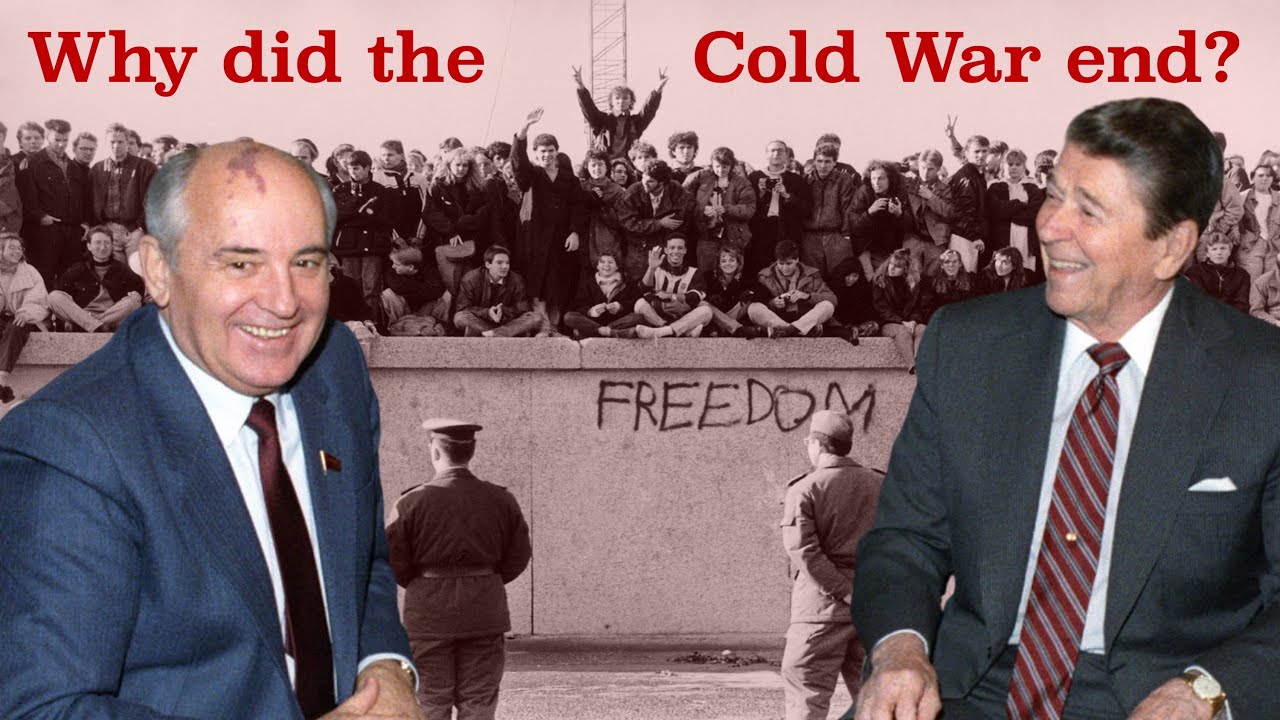
Pro-democracy movements gained strength: Solidarity in Poland, the Hungarian opening of the border with Austria in 1989, and mass protests in East Germany. The Berlin Wall fell on November 9, 1989.
Dissolution
Revolutions in 1989 toppled communist governments in Eastern Europe. After a failed coup in August 1991, Soviet republics declared independence. On December 25, 1991, Gorbachev resigned, and the Soviet Union dissolved on December 26.
Historians’ views
Scholars debate the relative role of US pressure, Soviet internal decay, Gorbachev’s decisions, and the role of people’s movements.
Legacy
The end of the Cold War led to a unipolar moment and NATO expansion, with 15 new independent states emerging from the USSR.
Key events
The Cold War ended through a combination of economic strain, political change and popular movements. Mikhail Gorbachev became Soviet leader in 1985 and introduced glasnost and perestroika. The Berlin Wall fell on November 9, 1989, Germany reunified on October 3, 1990, the Warsaw Pact dissolved in July 1991, and the Soviet Union dissolved on December 26, 1991.
Economic and military pressures
The Soviet economy suffered from low oil prices in the 1980s, military costs and inefficiency. The Soviet war in Afghanistan from 1979 to 1989 cost lives and money. Historians still debate how much credit goes to US pressure, Soviet reforms or internal factors, and many cite all three.
Based on data from the US Department of State Office of the Historian and the Wilson Center