Introduction
Water is an essential resource for life on Earth. It covers about 71% of the planet’s surface, yet only a small fraction of this vast amount is fresh and available for human use. This article explores how much water is fresh on Earth, how it is distributed, and important aspects to consider with regard to water conservation. Understanding the availability and management of fresh water is crucial for sustainable development and ensuring that this vital resource is available for future generations.
Understanding Water Distribution on Earth
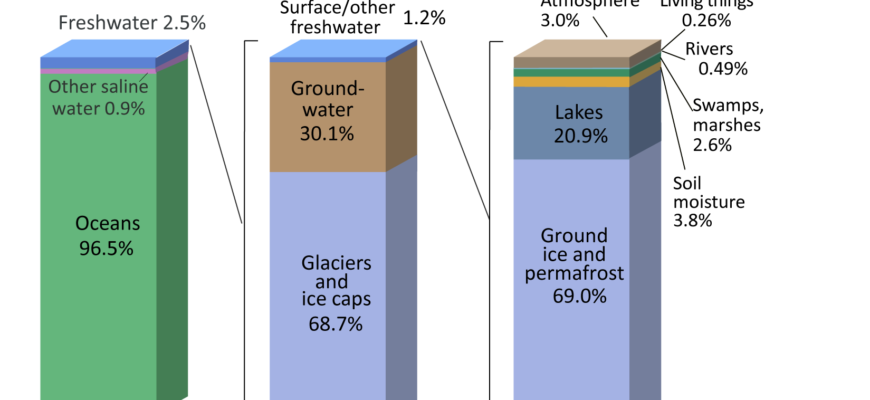
Water on Earth exists in various forms, including oceans, glaciers, rivers, lakes, and underground aquifers. Out of the total water available, about 97% is saltwater found in the oceans, leaving only 3% as fresh water.
- Fresh Surface Water: Streams, rivers, and lakes account for approximately 0.3% of the world’s fresh water.
- Groundwater: Groundwater is a significant source, comprising around 30% of the world’s fresh water.
- Glaciers and Ice Caps: Containing approximately 68.7% of the world’s fresh water, glaciers and ice caps are the largest reservoirs of fresh water, though not all are accessible for use.
How Much Fresh Water Is Available for Human Use?
Out of the 3% of water that is fresh, almost 2.5% remains trapped in glaciers, ice caps, and underground. This leaves a relatively small amount of fresh water that is easily accessible for human consumption and use. Understanding the availability of fresh water involves looking at not only quantity but also the factors that affect supply, such as climate, geography, and infrastructure.
The Hydrological Cycle and Fresh Water Renewal
The hydrological cycle, or water cycle, plays a critical role in renewing fresh water resources. This natural process involves the evaporation of water, condensation into clouds, and precipitation back to Earth. Although this cycle continuously replenishes fresh water, factors such as climate change, pollution, and human activities can disrupt these mechanisms, affecting water availability.
Challenges in Accessing Fresh Water
Even though the Earth harbors ample fresh water reserves, accessing this water poses significant challenges. Factors like geographical distribution, infrastructure limitations, and contamination affect water accessibility. Regions such as arid areas often face acute water shortages, needing improved technologies and policies for better water management.
Importance of Fresh Water Conservation
With challenges in availability and access, fresh water conservation becomes critical. By employing methods such as water recycling, rainwater harvesting, and smart irrigation systems, communities can use water more efficiently and sustainably. Education and policy reforms also play vital roles in promoting water conservation practices globally.
Future of Fresh Water on Earth
Anticipating future scenarios regarding fresh water involves studying climate models, population growth trends, and technological advancements. While challenges exist, innovations in water purification, desalination technology, and infrastructure reforms provide hope for meeting future water needs.
Frequently Asked Questions
| Question | Answer |
|---|---|
| What percentage of water on Earth is fresh? | Only about 3% of Earth’s water is fresh, with the majority found in glaciers and underground aquifers. |
| How can we access more fresh water? | Accessing more fresh water can involve solutions such as improving technology for desalination, better infrastructure, and water recycling systems. |
| Why is water conservation important? | Water conservation is vital to ensure sustainable use of limited fresh water resources, aiding in addressing shortages and reducing environmental impact. |
| What role does the water cycle play in fresh water availability? | The water cycle is crucial for replenishing fresh water supplies through evaporation, condensation, and precipitation processes. |
| Is it possible to increase the fresh water available on Earth? | While increasing the overall fresh water supply is challenging, improved management and technology can enhance its availability for use. |
Conclusion
Fresh water is a finite yet vital resource that demands careful management and conservation. By understanding its distribution and availability, adopting innovative solutions, and fostering collaboration, we can improve our stewardship of fresh water resources and ensure their sustainability for future generations.