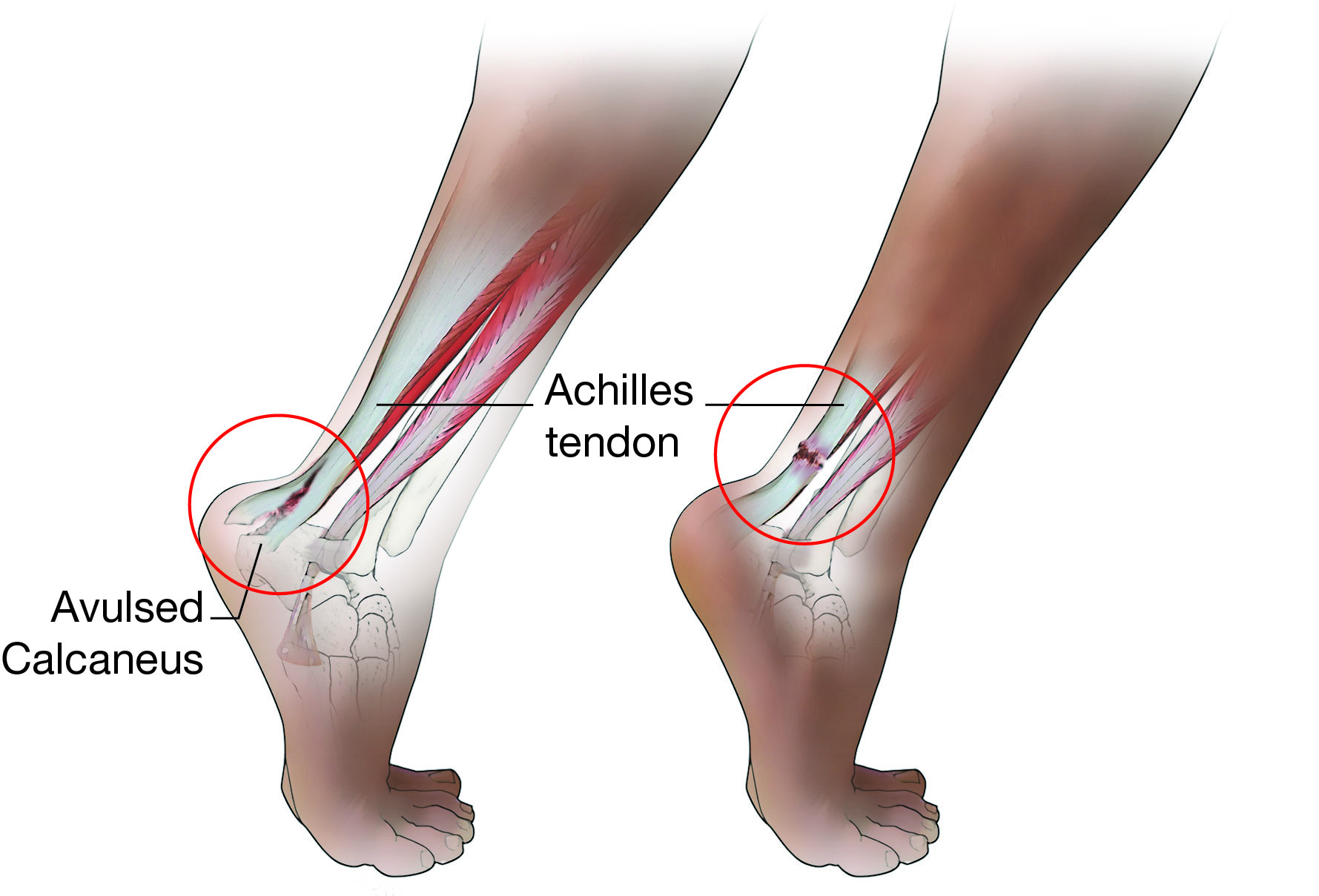
An Achilles tendon rupture is usually caused by sudden forceful movement such as sprinting or jumping, and risk rises with tendon weakness, age, or certain antibiotics.
Causes
- Sudden push off, jumping or sprinting.
- Sudden stumble or fall.
- Overuse and degeneration with age.
- Fluoroquinolone antibiotics.
- Steroid injections.
Who
Most common in men aged 30 to 50 who play weekend sports.
Signs
A snap or pop, sharp pain, trouble walking on tiptoes.
Treatment
Boot or surgery.
Emergency
See a doctor right away.
Mechanism and risk
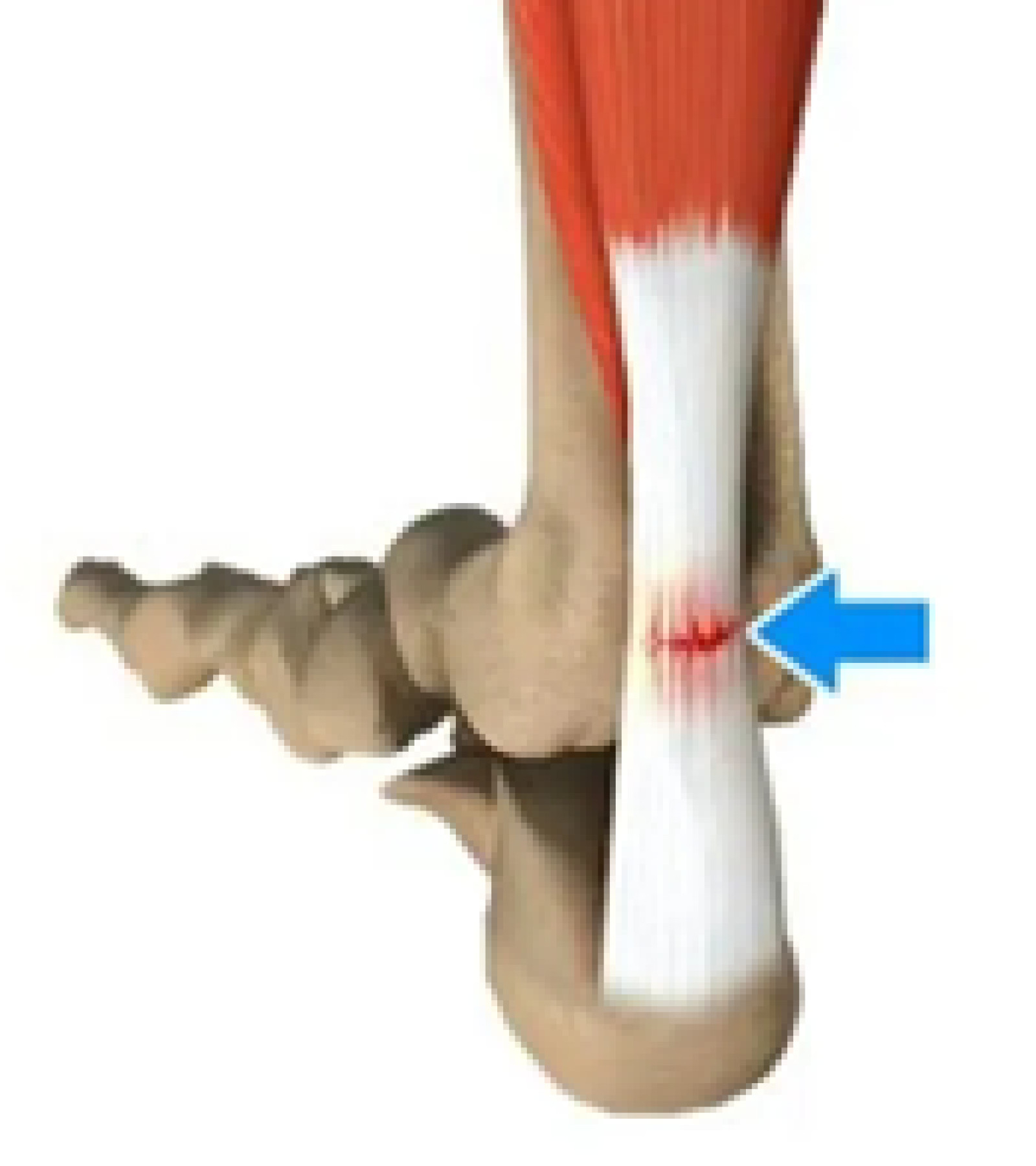
The Achilles tendon connects the calf muscles to the heel and can handle loads up to about 8 times body weight in running. Rupture usually happens during sudden push-off or jumping, such as in basketball, tennis or soccer, with a pop, sharp pain and difficulty walking. About 75 percent of ruptures occur during sports.
- Peak incidence is in men aged 30 to 50 who play occasional sports.
- Fluoroquinolone antibiotics such as ciprofloxacin carry an FDA boxed warning for tendon rupture, with risk higher in older adults and those on corticosteroids.
- Corticosteroid injections near the tendon and chronic tendinopathy increase risk.

Diagnosis and treatment
The Thompson test checks whether squeezing the calf moves the foot. Ultrasound or MRI confirm it. Treatment is either non-surgical (boot, early rehabilitation) or surgical repair, with studies showing similar outcomes when rehab is early, though surgery may lower re-rupture. Recovery takes 6 to 12 months. See a doctor right away if a rupture is suspected.
Mechanism and risk
The Achilles tendon connects the calf muscles to the heel bone and withstands loads of several times body weight during running and jumping. Ruptures typically happen during sudden push off in sports such as basketball, tennis and soccer, and most often in men aged 30 to 50, the so called weekend athlete. Risk factors include fluoroquinolone antibiotics such as ciprofloxacin, corticosteroid injections, previous tendon problems and reduced blood supply in the tendon about 2 to 6 cm above the heel.
Diagnosis and treatment
Patients often report a pop and feel as if they were kicked in the back of the leg. The Thompson test (squeezing the calf) shows no foot movement when the tendon is torn. Treatment may be surgical repair or a functional nonoperative protocol with a boot, and trials show similar results in many patients when rehabilitation is early. Recovery takes 6 to 12 months.
Epidemiology and risk numbers
Achilles ruptures occur at about 6 to 37 per 100,000 people a year, and incidence has been rising. Men are affected 2 to 10 times more often than women. Fluoroquinolone antibiotics carry an FDA boxed warning about tendon rupture, with risk highest in people over 60 and those on corticosteroids. About 75 percent of ruptures happen during sport.
Treatment comparison and rehab
A 2019 meta analysis of randomized trials found similar re rupture rates between surgery and a functional protocol with early weight bearing, though surgery has risk of infection and wound complications. Rehab includes a boot with heel wedges for about 6 to 8 weeks, then physical therapy to rebuild calf strength. Most people return to sport by 6 to 12 months, and some never fully regain pre injury strength.
Based on data from the American Academy of Orthopaedic Surgeons and the FDA