Cats sneeze from dust, allergies, or upper respiratory infections. See a vet if it is frequent or comes with discharge.
Common causes
- Dust or irritants.
- Allergies.
- Upper respiratory infection (herpesvirus, calicivirus).
- Nasal foreign body.
- Dental disease.
Normal
An occasional sneeze is fine.
See a vet
If sneezing is frequent, with discharge, eye drainage, loss of appetite or open-mouth breathing.
Prevention
Keep vaccines current and the litter low dust.
Triggers
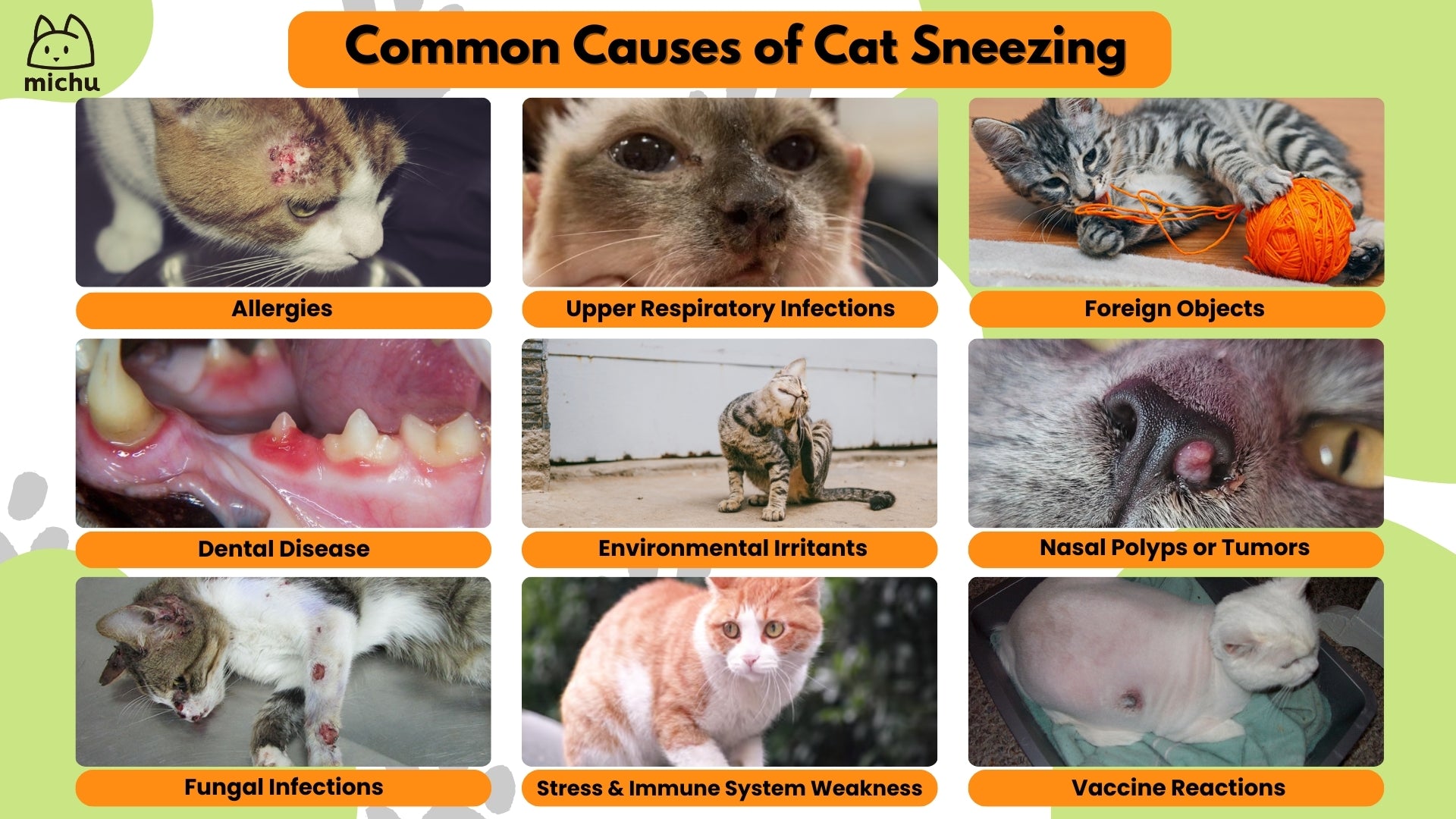
Cats sneeze to clear irritants from the nose. Occasional sneezing is normal. Common triggers are dust, litter dust, perfume, smoke, cleaning products and pollen.
Upper respiratory infection
Feline herpesvirus (FHV-1) and feline calicivirus cause most cat colds, with sneezing, nasal discharge, watery eyes, fever and reduced appetite. These viruses account for about 80% to 90% of feline upper respiratory infections. Cats can carry herpesvirus for life, with flare ups during stress. Vaccination (FVRCP) reduces the severity.
Other causes
- Bacterial infections such as Bordetella and Chlamydophila.
- Allergies and asthma.
- Foreign objects such as grass blades.
- Dental disease with root infection near the sinuses.
- Nasal polyps or tumors.
- Fungal infections like cryptococcosis.
Normal sneezing

A few sneezes a day with a clear nose and normal appetite and energy are usually not a concern.
See a vet if
Sneezing continues for more than a few days, or there is thick yellow or green discharge, bloody discharge, open mouth breathing, wheezing, loss of appetite, lethargy, eye discharge, or fever. Kittens and senior cats deteriorate quickly. Cats not eating for more than 24 hours need prompt attention.
Home care
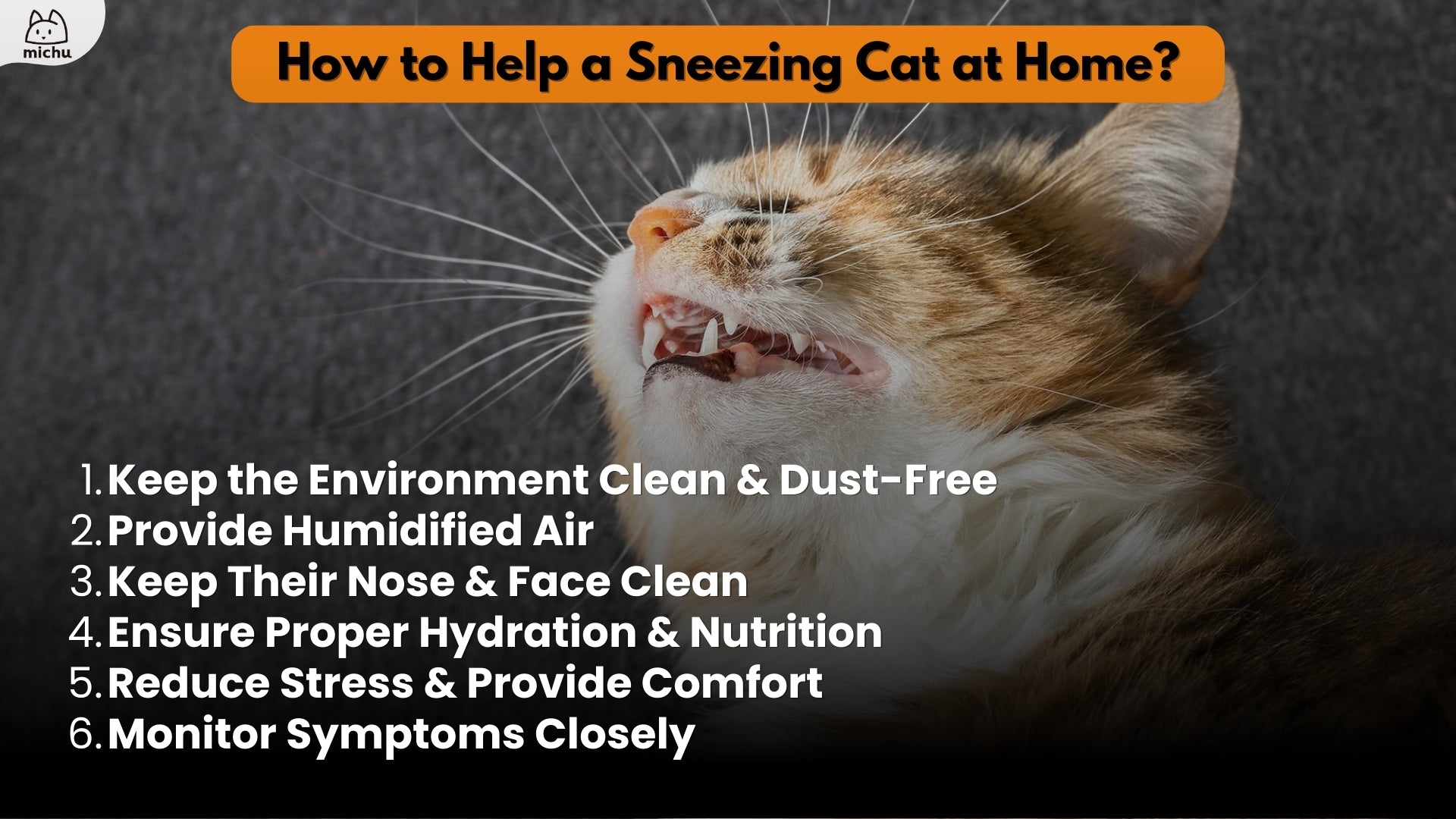
- Wipe the nose and eyes with a warm damp cloth.
- Offer warm, smelly food to encourage eating.
- Use a humidifier or steamy bathroom.
- Keep the cat in a low stress environment.
Prevention
- Keep vaccinations current.
- Use low dust, unscented litter.
- Avoid smoke and aerosols.
- Reduce stress.
- Isolate sick cats.
Why cats sneeze
Occasional sneezing is normal and clears dust or irritants. Frequent sneezing can result from upper respiratory infection, most often feline herpesvirus and calicivirus, which cause up to 90 percent of such infections. Other causes are allergies, dental disease, nasal polyps, foreign bodies and fungal infection.
Care
Take a cat to the vet if sneezing lasts more than a few days or comes with discharge, eye symptoms, loss of appetite or lethargy. Vaccines (FVRCP) protect against herpes and calicivirus. Use a humidifier, keep the cat’s nose and eyes clean and avoid smoke, scented litter and strong cleaners. Isolate sick cats from others.
Based on data from the American Association of Feline Practitioners and Cornell Feline Health Center