A nosebleed when blowing your nose usually comes from dry or irritated nasal lining. Use saline spray or a humidifier, and blow gently.
Common causes
- Dry air or dry nasal lining.
- Nasal irritation or allergies.
- Colds and sinus infection.
- Blowing too hard.
- Nasal sprays.
- Blood thinners.
- High blood pressure.
Fix
- Use saline spray or gel.
- Run a humidifier.
- Blow gently.
If it bleeds
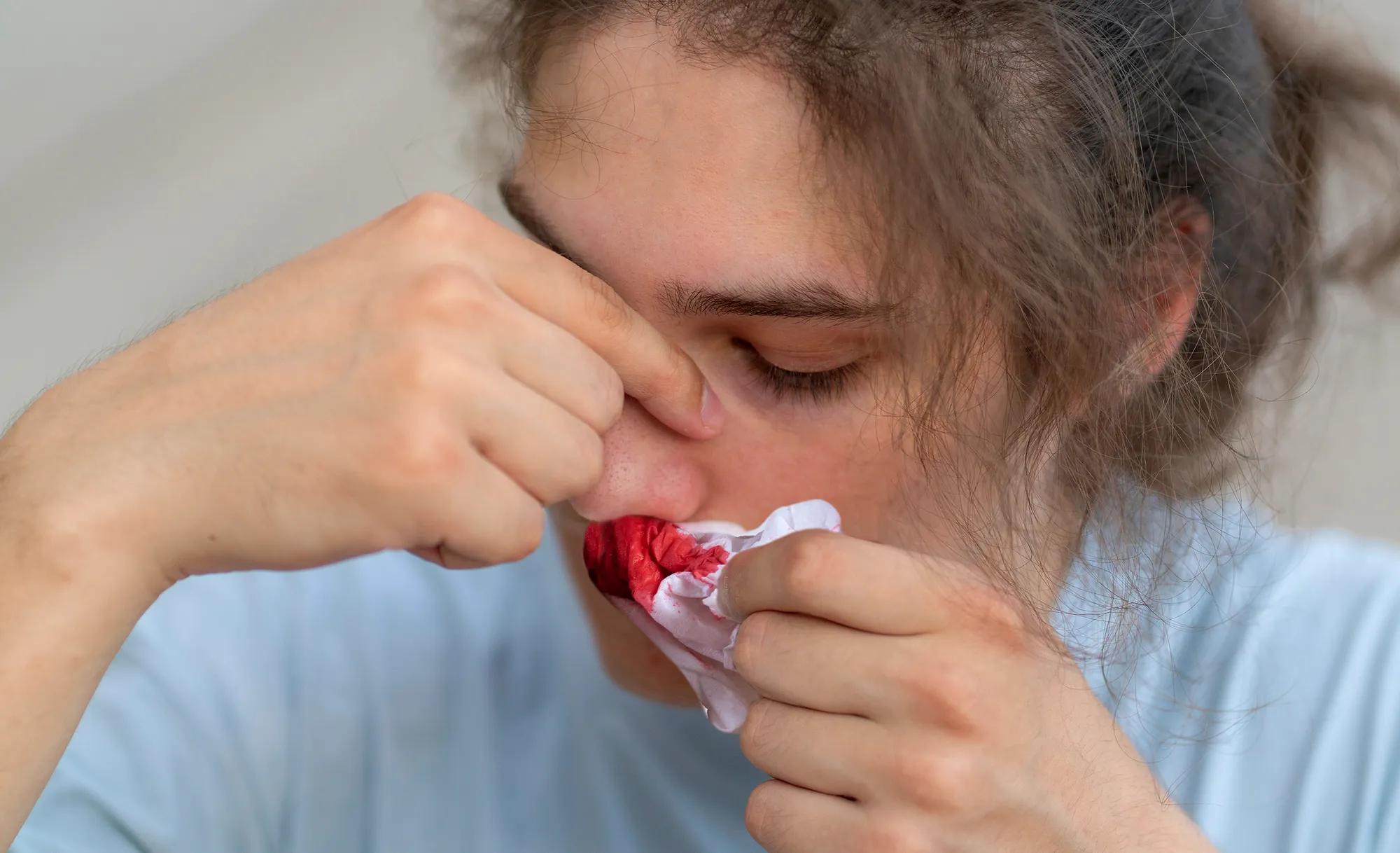
Lean forward and pinch your nose for 10 minutes.
See a doctor
If nosebleeds are frequent or last more than 20 minutes.
Why the nose bleeds
The front of the nasal septum has a network of fragile vessels called Kiesselbach plexus, and about 90 percent of nosebleeds come from this area. Blowing hard, dry air, allergies, colds, nasal sprays and picking dry the lining or burst vessels. About 60 percent of people have a nosebleed at some point, according to the American Academy of Otolaryngology.
- Anticoagulants, aspirin and NSAIDs make bleeding last longer.
- Dry heating in winter is a common trigger.
- High blood pressure does not usually cause nosebleeds but can make them harder to stop.
What to do

Sit up, lean forward and pinch the soft part of the nose for 10 to 15 minutes without releasing. Spit out blood rather than swallowing. Apply a saline gel or petroleum jelly inside the nostril twice daily to keep tissue moist and use a humidifier. Seek care if bleeding lasts over 20 minutes, follows a head injury, or recurs often, as it may reflect a clotting disorder or other cause.
Causes
The inner nose has fragile blood vessels, and dry air, colds, allergies, nose picking, medicines such as blood thinners and hard blowing can break them. About 60 percent of people have a nosebleed at some point.
First aid
Sit upright, lean forward and pinch the soft part of the nose for 10 to 15 minutes. Seek care if bleeding lasts over 20 minutes, follows a head injury or happens frequently. Use saline spray or a humidifier.
Anatomy of the nose
The front of the nasal septum has Kiesselbach’s plexus, where several small arteries meet near the surface, causing about 90 percent of nosebleeds (anterior). Dry air, nasal sprays, cocaine use, high blood pressure and clotting problems raise risk.

Treatment and prevention
Pinch the soft part of the nose and lean forward for 10 to 15 minutes; do not tilt the head back. Apply petroleum jelly or saline gel, use a humidifier and blow gently. Recurrent nosebleeds more than weekly should be evaluated; cautery may be done in clinic. Seek emergency help if bleeding exceeds 20 minutes.
Based on data from the American Academy of Otolaryngology and the Mayo Clinic