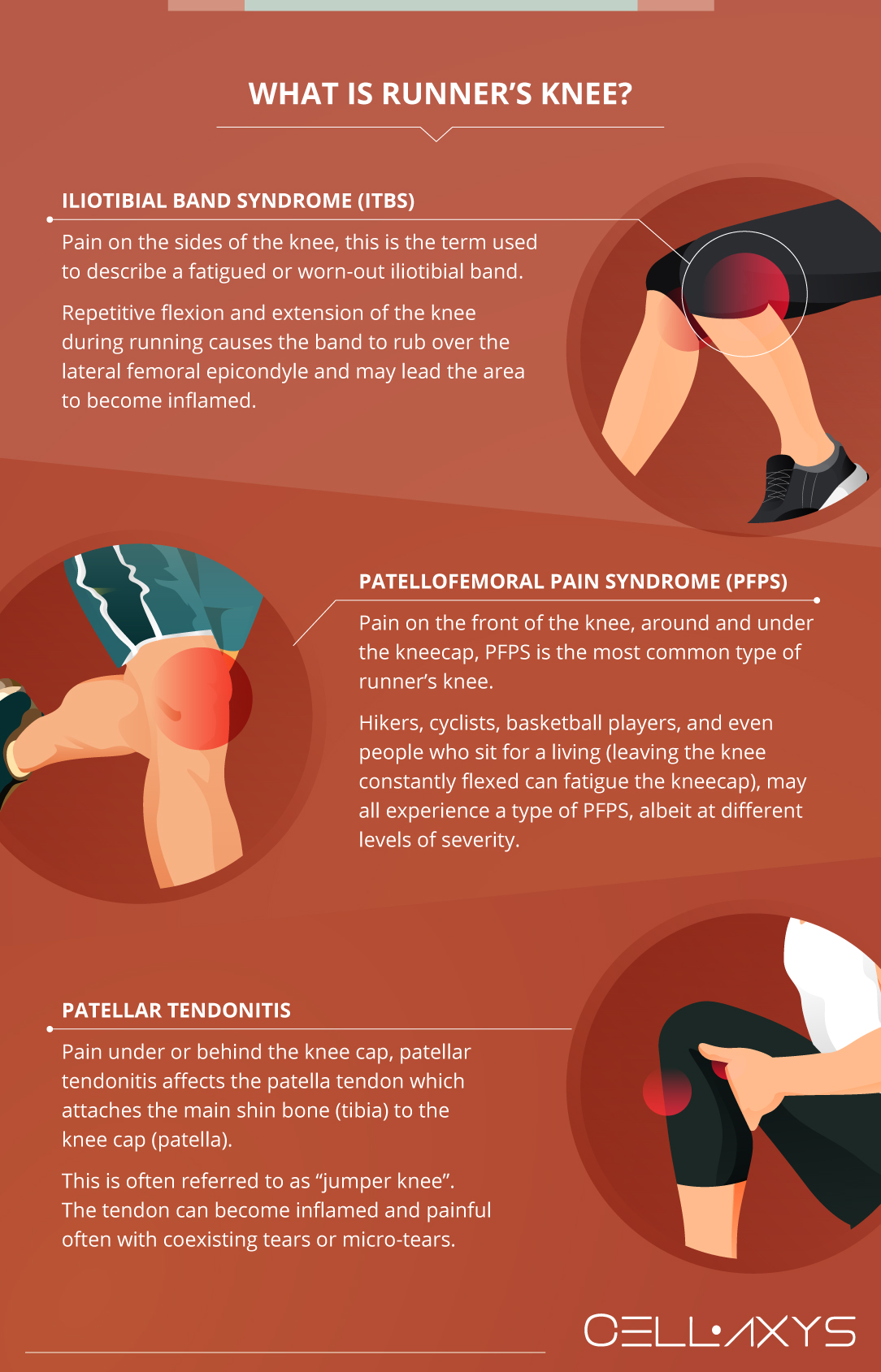
Runner’s knee (patellofemoral pain) is caused by overuse, weak thigh and hip muscles, poor kneecap tracking, or sudden increases in running.
Name
Patellofemoral pain syndrome.
Causes
- Overuse and sudden increases in mileage.
- Weak quads and hip muscles.
- Poor kneecap tracking.
- Flat feet.
- Tight hamstrings and IT band.
- Wrong shoes.
Symptoms
Pain around or behind the kneecap, worse on stairs or squatting.
Treatment
Rest, strengthening of hips and quads and good shoes.
Recovery
Weeks to months.
See a doctor
If swelling or instability.
Name and mechanism
Runner’s knee is patellofemoral pain syndrome (PFPS), pain around or behind the kneecap. It affects an estimated 25 percent of active people and is more common in women and in teens and young adults. The kneecap tracks in the femoral groove, and poor tracking or overload irritates cartilage and surrounding tissues.
- Causes include weak quadriceps and hips, tight hamstrings and calves, flat feet, sudden mileage increases, hills and stairs.
- Pain is worse when going down stairs, squatting or sitting for long with bent knees (“moviegoer’s sign”).
- Imaging is often normal.
Treatment
Reduce running, strengthen hips and quadriceps (a 2018 consensus statement from the Patellofemoral Pain Research Retreat recommends exercise therapy as the core treatment), use taping or foot orthoses in some cases, and increase mileage gradually. Recovery takes 6 to 12 weeks for many, but can take longer. See a doctor for swelling, locking, giving way or pain that does not improve.
Name and mechanism
Runner’s knee, patellofemoral pain syndrome, causes pain around or behind the kneecap from overuse, muscle imbalance and poor tracking. It is among the most common running injuries.
Treatment
Reduce running, strengthen quads and hips, and use supportive shoes. Ice and anti inflammatory medicines can help.
Biomechanics
Patellofemoral pain syndrome accounts for 25 percent of knee injuries in runners. Weak hip abductors cause the knee to collapse inward (valgus), increasing patellar stress. Running downhill or stairs increase force: the patellofemoral joint sees 3 times body weight on stairs. Female athletes are affected more often.

Rehabilitation
Strengthening hips and quads for 6 weeks gave better outcomes in trials than rest. Taping the patella, orthotics and gait retraining with a higher cadence (5 to 10 percent) reduce load. Most people recover within 3 months. Avoid long periods of knee flexion. Imaging is rarely needed, except after trauma.
Based on data from the British Journal of Sports Medicine and the American Academy of Orthopaedic Surgeons