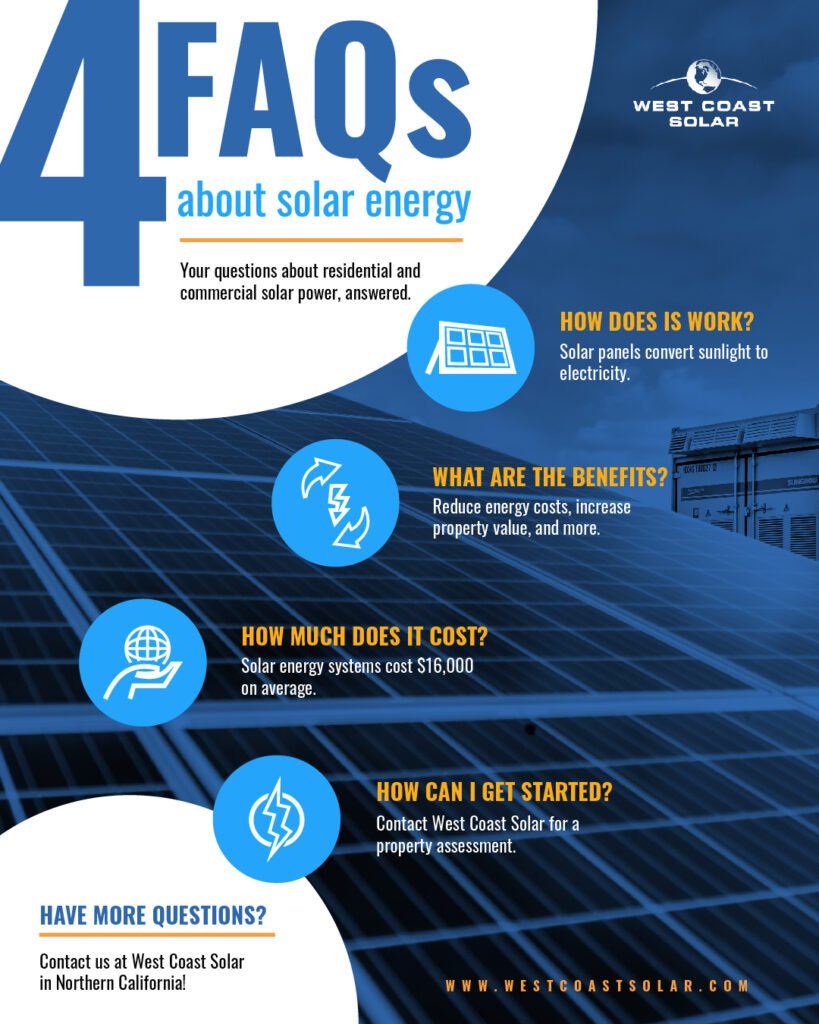
Solar power cuts electricity bills, reduces carbon emissions, and can raise home value.
Benefits
- Lowers electric bills, often by 50% to 90%.
- Cuts carbon: an average system offsets about 3 to 4 tons of CO2 a year.
- Raises home value by about 4% (Zillow).
- 30% federal tax credit (Residential Clean Energy Credit).
Payback
Typical payback is 6 to 10 years.
Lifespan
25 to 30 years.
Drawbacks
Upfront cost, roof suitability and weather.
Cost and incentives
In the US, the Residential Clean Energy Credit provides a 30% federal tax credit for solar installations through 2032, stepping down afterwards. Some states offer extra incentives, rebates and net metering. Check the DSIRE database for local programs.
Average system size and cost
A typical home system is 6 to 10 kilowatts. Costs in 2023 averaged about 2.80 to 3.50 dollars per watt before incentives, which is about 17,000 to 35,000 dollars before the credit.
Payback period
The typical payback time is 6 to 12 years in the US, depending on electricity rates, sunlight and incentives. Many systems last 25 to 30 years, so they can produce savings for over a decade after payback.
Environmental benefits
An average home solar system offsets about 3 to 4 tons of CO2 per year, similar to planting around 100 trees, according to the EPA equivalency calculator.
Property value

A Lawrence Berkeley National Laboratory study found that homes with owned solar panels sold for about 4% more, around 15,000 dollars on average.
Energy independence
Solar with battery storage can provide backup power during outages.
Drawbacks
- Upfront cost.
- Roof must be in good condition and suitably oriented (south facing is best in the northern hemisphere).
- Shade reduces production.
- Net metering rules vary and are changing in some states.
- Leased systems and power purchase agreements may complicate selling the home.
Maintenance
Panels need little maintenance. Inverters last 10 to 15 years.
Choose installers
Get three or more quotes, check licenses, reviews and warranties.
Net metering and battery storage
Net metering credits a solar owner for surplus power sent to the grid, but policies differ by state and utility. California moved to Net Billing in April 2023 (NEM 3.0), which pays far less for exported power than the earlier retail rate credit, making home batteries more attractive. A typical home battery such as a Tesla Powerwall stores about 13.5 kWh and can cost roughly 10,000 to 15,000 USD installed. Batteries provide backup during outages, which grid tied panels alone cannot, because standard grid tied systems shut off for safety when the grid goes down.

What affects savings
Savings depend on roof orientation (south facing is best in the Northern Hemisphere), shading, local electricity rates and sunlight hours. Panels typically degrade about 0.5 percent per year and carry 25 year performance warranties. Inverters often need replacing after 10 to 15 years. Get at least three quotes, check installer licensing and compare price per watt rather than total price.
Based on data from the US Department of Energy, NREL and the California Public Utilities Commission