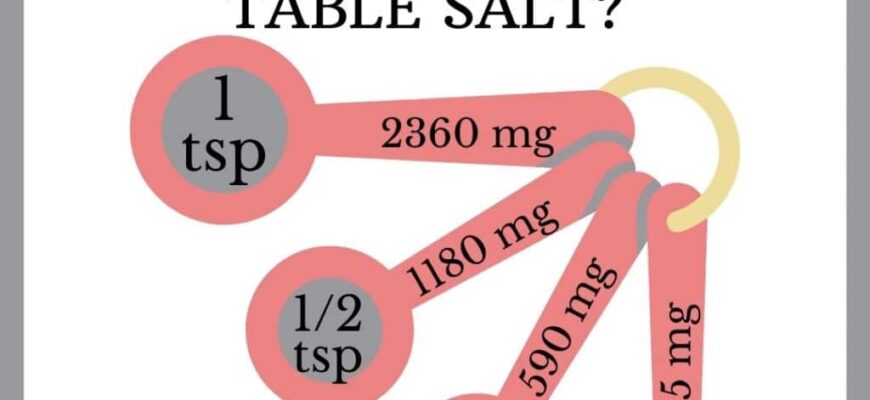
- How Much Sodium is in 1/4 Teaspoon of Salt?
- Introduction
- What is Sodium?
- How Much Sodium is in 1/4 Teaspoon of Salt?
- Comparing Sodium Content in Different Salt Varieties
- Why Monitoring Sodium Intake is Important?
- Common Mistakes in Estimating Sodium Intake
- How to Reduce Sodium Intake
- Is It Possible to Replace Table Salt with Other Varieties?
- Frequently Asked Questions
- How much sodium is in 1/4 teaspoon of table salt?
- Does sea salt have less sodium than table salt?
- Can I replace table salt with kosher salt to reduce sodium intake?
- What are the health risks of high sodium intake?
- What are some tips to reduce sodium intake?
How Much Sodium is in 1/4 Teaspoon of Salt?
Understanding the sodium content in common household ingredients is crucial for maintaining a balanced diet. Salt, a staple in most kitchens, is one of the primary sources of sodium in our diets. But how much sodium does a quarter teaspoon of salt actually contain? In this article, we will explore the sodium content in 1/4 teaspoon of salt, compare it with other quantities, and answer some frequently asked questions.
Introduction
Sodium is a vital mineral necessary for various bodily functions, including fluid balance and nerve function. However, excessive sodium intake can lead to health issues like hypertension and heart disease. As a result, monitoring sodium intake is important for maintaining good health. Let’s delve into the details of sodium in salt, particularly focusing on the typical amount found in 1/4 teaspoon.
What is Sodium?
Sodium is a mineral found in many foods and is a part of the compound sodium chloride, commonly known as table salt. It plays a key role in maintaining fluid balance, transmitting nerve signals, and aiding in muscle contraction. However, it’s important to keep sodium consumption within recommended limits due to potential health risks.
How Much Sodium is in 1/4 Teaspoon of Salt?
A 1/4 teaspoon of table salt typically contains approximately 575 milligrams of sodium. This is a significant portion of the recommended daily sodium intake, highlighting why it’s important to be cautious with salt usage in cooking and food preparation. Understanding this measurement can help individuals make informed dietary choices.
Comparing Sodium Content in Different Salt Varieties
Different types of salt, such as sea salt, Himalayan pink salt, and kosher salt, have varying sodium contents. Here’s a comparison:
| Type of Salt | Sodium Content in 1/4 Teaspoon |
|---|---|
| Table Salt | 575 mg |
| Sea Salt | Around 560 mg |
| Himalayan Pink Salt | About 480 mg |
| Kosher Salt | Around 440 mg |
Why Monitoring Sodium Intake is Important?
Excessive sodium intake can lead to high blood pressure, which is a major risk factor for cardiovascular diseases. The American Heart Association recommends no more than 2,300 milligrams of sodium per day, with an ideal limit of less than 1,500 milligrams per day for most adults. Being aware of sodium content in common ingredients can help mitigate health risks.
Common Mistakes in Estimating Sodium Intake
One common mistake is underestimating sodium content by not accounting for various sources, including processed and restaurant foods. Another mistake is assuming that all salts have the same sodium content, which is not true as shown in our comparison table above. Portion control and label reading are crucial steps in accurately gauging sodium intake.
How to Reduce Sodium Intake
- Opt for fresh, unprocessed foods instead of packaged ones.
- Use herbs and spices to flavor food instead of salt.
- Read nutrition labels to keep track of sodium content.
- Choose low-sodium alternatives when possible.
Is It Possible to Replace Table Salt with Other Varieties?
Yes, replacing table salt with alternatives like Himalayan pink salt or sea salt can introduce varying levels of minerals and flavor without significantly increasing sodium intake. However, moderation is key in maintaining sodium consumption within recommended guidelines.
Frequently Asked Questions
How much sodium is in 1/4 teaspoon of table salt?
A 1/4 teaspoon of table salt contains approximately 575 milligrams of sodium.
Does sea salt have less sodium than table salt?
Sea salt has slightly less sodium than table salt, with around 560 milligrams in 1/4 teaspoon.
Can I replace table salt with kosher salt to reduce sodium intake?
Yes, you can replace table salt with kosher salt, which typically has less sodium. However, be mindful of portion sizes.
What are the health risks of high sodium intake?
High sodium intake can lead to high blood pressure and increase the risk of heart disease and stroke.
What are some tips to reduce sodium intake?
Use herbs and spices instead of salt, opt for fresh foods, check nutrition labels, and choose low-sodium products.