Hair removal cream contains chemicals that break the protein bonds in hair so it can be wiped away from the skin.
How it works
Depilatory creams contain thioglycolic acid salts (calcium thioglycolate). They break disulfide bonds in keratin, making hair dissolve so it can be wiped off.
Time
Leave on for 3 to 10 minutes.
Results
Lasts 1 to 2 weeks. It removes hair at the skin surface.
Safety
- Do a patch test.
- Don’t use on broken skin or the face unless labeled.
- It can cause burns or irritation.
Avoid
Over-leaving the cream.
Active ingredients
Hair removal creams (depilatories) contain alkaline chemicals such as calcium thioglycolate or potassium thioglycolate, with a pH of 10 to 12.5. These break the disulfide bonds in keratin, dissolving the hair shaft so it can be wiped away.
Usage
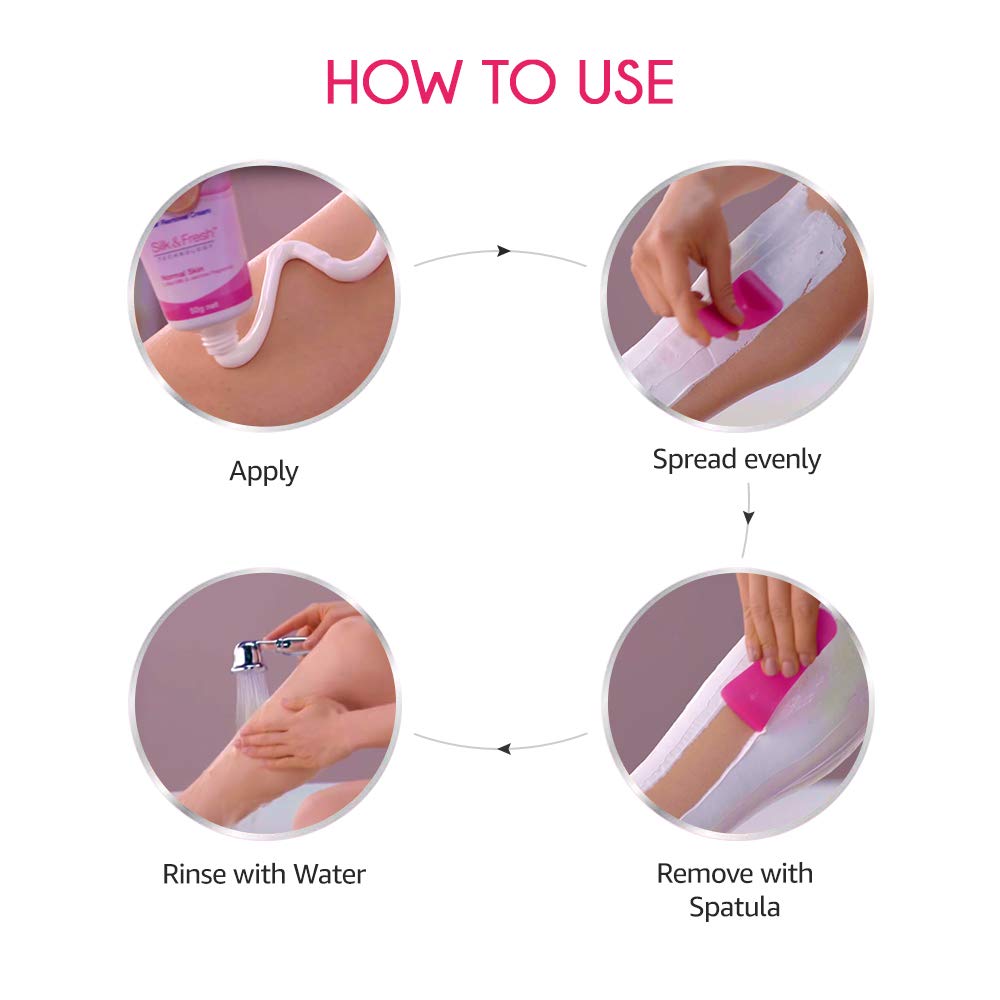
Apply a thick layer to dry skin, wait 3 to 10 minutes as directed (not longer), then wipe off with a spatula or damp cloth and rinse with water. Do a patch test 24 hours before use.
Results
Hair is removed at the skin surface, so regrowth appears in 1 to 2 weeks, softer than stubble from shaving because the tip is not blunt. Results last longer than shaving by a few days.
Risks
- Chemical burns, redness, rash and blistering.
- Allergic reactions.
- Skin irritation, especially on sensitive skin or after recent shaving.
- Strong smell from sulfur compounds.
The US Food and Drug Administration regulates these as cosmetics and has received reports of burns and allergic reactions.
Where not to use
Do not use on the face unless the product is labeled for the face. Avoid broken or sunburned skin, the eyes, nipples and genital mucous membranes (unless specially labeled for the bikini area).
Aftercare
Rinse with cool water, moisturize with fragrance free lotion and avoid sun, hot water and exfoliating for 24 hours.
Alternatives
Shaving, waxing, epilation, sugaring, laser hair removal and electrolysis (permanent).
Pregnancy
Check the label and ask a doctor, although absorption through skin is limited.
Stop if
You feel burning or stinging. Remove right away and rinse with cool water. Seek medical care for blisters or severe reactions.
Chemistry and timing
Depilatory creams contain thioglycolic acid salts such as calcium thioglycolate or potassium thioglycolate, which break the disulfide bonds in keratin so hair dissolves at the skin surface. The cream usually stays on for 3 to 10 minutes depending on hair type and product, and then it is wiped or rinsed off. Results last longer than shaving, usually several days up to a week or two, since hair is removed slightly below the skin surface, not at the root.
Safety and patch testing
Do a patch test on a small skin area 24 hours before first use. Chemical burns and irritation can occur, especially if left on longer than instructed or used on broken skin, sunburned skin or sensitive areas. The FDA warns against using depilatories on the face unless the product says it is designed for the face. Avoid combining with other exfoliants on the same day.
Based on data from the US Food and Drug Administration and the American Academy of Dermatology