Period pain happens when the uterus contracts to shed its lining, triggered by hormone-like chemicals called prostaglandins.
Why
Before and during periods, the uterus makes prostaglandins that cause contractions to shed the lining. High levels bring stronger cramps.
Who gets it
Up to 90% of women have some period pain.
Types
- Primary: no underlying condition.
- Secondary: due to endometriosis or fibroids.
Relief
Heat, NSAIDs, exercise and hormonal birth control.
See a doctor
If pain is severe, worsening or interferes with life.

Mechanism
Period pain (dysmenorrhea) occurs because the uterus contracts to shed its lining. Cells in the uterine lining produce prostaglandins before and during menstruation, which trigger contractions and constrict blood vessels, temporarily reducing oxygen to the uterine muscle and causing cramping.
How common
More than half of menstruating women experience pain for one to two days each month, and 10% to 15% have pain severe enough to interfere with activities, according to ACOG.
Risk factors
Younger than 30, early puberty (before age 11), heavy bleeding, family history, smoking and never giving birth.

Types
- Primary: no underlying disease. Usually begins 6 to 12 months after the first period and tends to improve with age and after childbirth.
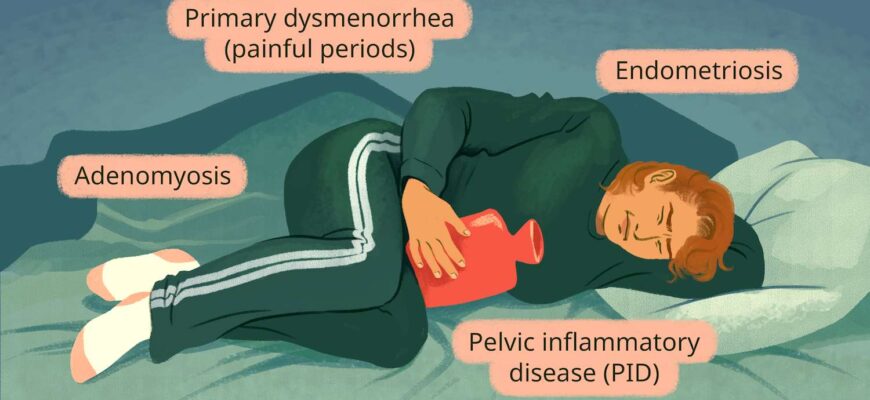
- Secondary: due to conditions such as endometriosis, adenomyosis, fibroids, pelvic inflammatory disease or an IUD. Pain often starts later in life, lasts longer and worsens over time.
Typical symptoms
Cramping pain in the lower abdomen that may spread to the back and thighs, starting 1 to 3 days before bleeding, peaking at 24 hours and subsiding in 2 to 3 days. Nausea, diarrhea, headache and fatigue may accompany it.
Relief
- NSAIDs (ibuprofen, naproxen) started at the first sign. They reduce prostaglandin production.
- Heat from a heating pad or warm bath.
- Exercise, which releases endorphins.
- Hormonal birth control to reduce the lining thickness.
- Transcutaneous electrical nerve stimulation (TENS) and acupressure may help.
- Magnesium, vitamin B1 and omega-3 have limited evidence.
See a doctor if
Pain is severe, not relieved by NSAIDs, worsens, starts after age 25, comes with heavy bleeding, fever or pain with sex, or interferes with school, work or life. Endometriosis takes an average of 7 to 10 years to be diagnosed, so persistent pain deserves investigation.
Biology of the pain
During menstruation the uterine lining releases prostaglandins, which cause the uterus to contract. Higher levels are linked with stronger cramps. Primary dysmenorrhea is pain without an underlying condition, while secondary dysmenorrhea is caused by conditions such as endometriosis, fibroids or adenomyosis. Surveys suggest that between 50 and 90 percent of menstruating people report some pain, and severe pain affects roughly 10 to 15 percent.

Treatment options
NSAIDs such as ibuprofen or naproxen reduce prostaglandins and work best when started at the first sign of pain or bleeding, following the label dose. Heat therapy at around 40 degrees Celsius is as effective as ibuprofen in some trials. Hormonal birth control can reduce pain. Pain that disrupts daily life, worsens over time or comes with heavy bleeding should be evaluated for endometriosis.
Based on data from the American College of Obstetricians and Gynecologists and the NIH