A hard disk drive stores data magnetically on spinning platters read by a moving head, while solid-state drives use flash memory.
HDD
- Spinning magnetic platters, 5,400 to 7,200 RPM.
- A read/write head moves over the platters.
- Data is stored as magnetic bits.
- Lower cost per GB.
SSD
- Flash memory chips with no moving parts.
- Faster, quieter and more durable.
Capacity
HDDs go up to 30+ TB.
Speed
SSD reads 500 to 7,000 MB/s. HDD 80 to 160 MB/s.
Lifespan
HDDs 3 to 5 years.
HDD and SSD in numbers
A hard disk drive stores data magnetically on spinning platters, typically 5,400 or 7,200 RPM, read by a head on an actuator arm. Capacities reach 20 TB to 30 TB or more for enterprise models. A solid-state drive uses NAND flash memory with no moving parts.
- HDD sequential speeds are about 100 to 250 MB/s, and SSDs on SATA reach about 550 MB/s. NVMe PCIe 4.0 drives reach 7,000 MB/s and PCIe 5.0 drives reach over 12,000 MB/s.
- Backblaze reports annualized failure rates for HDDs of roughly 1 to 2 percent in recent years across large fleets.
- SSD endurance is rated in terabytes written (TBW), commonly 300 to 1,200 TBW for consumer drives.
Choosing
HDDs cost less per terabyte, about 15 to 25 USD per TB, and suit archives. SSDs cost more per TB but offer much faster boot and load times, and resist shock. Back up data using the 3-2-1 rule: three copies, two media types, one off-site. Drive failure signs include clicking noises, slow access and file corruption.
HDD and SSD in numbers
Hard disk drives store data on spinning platters read by a moving head, typically 5,400 or 7,200 rpm. SSDs use flash memory with no moving parts. SSDs reach 500 MB/s (SATA) to 7,000 MB/s (NVMe PCIe 4.0), while HDDs reach about 100 to 250 MB/s.
Choosing
HDDs cost about 15 to 25 USD per terabyte, while SSDs cost about 50 to 80 USD per terabyte. Use SSD for the system drive and HDD for bulk storage. Back up data.
Inside a hard disk
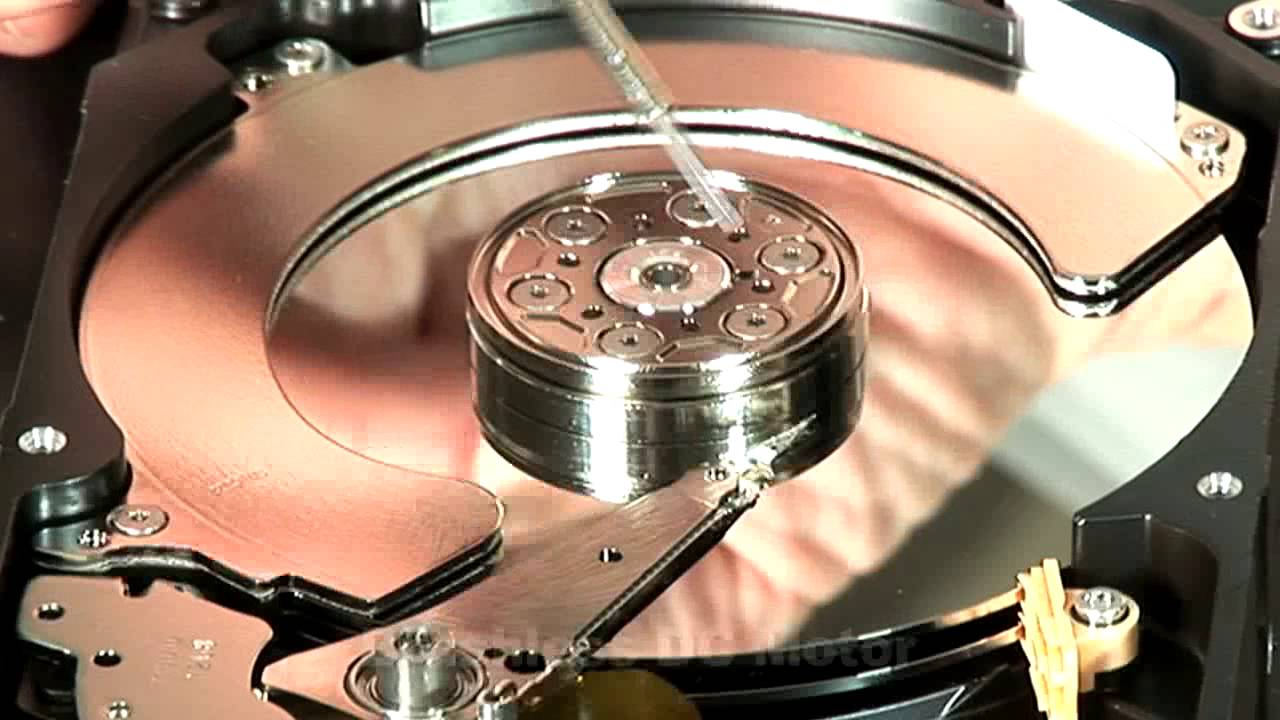
A hard disk has platters of aluminum or glass coated with magnetic material, spinning at 5,400 to 15,000 rpm, and read write heads flying about 5 nanometers above the surface. Capacities reach 30 TB or more with technologies like shingled magnetic recording and HAMR. SSDs use NAND flash with write endurance rated in terabytes written.
Reliability data
Backblaze reports an annualized failure rate of about 1 to 2 percent for hard drives in its data centers, with drives often lasting 3 to 5 years. Back up data using the 3-2-1 rule: three copies, two media, one offsite. SMART tools monitor drive health. Dropping a spinning drive can crash heads.
Based on data from Backblaze and Seagate