- $23 an Hour is How Much a Year After Taxes?
- How to Calculate Your Yearly Income from an Hourly Wage
- Understanding Your Tax Obligations
- Is $23 an Hour a Livable Wage?
- Impact of Deductions and Benefits
- Budgeting with Your Take-Home Pay
- Choosing Between Hourly and Salaried Employment
- Using Online Calculators for Accurate Estimates
- Common Mistakes in Calculating Take-Home Pay
- Real-Life Examples and Case Studies
- FAQs
$23 an Hour is How Much a Year After Taxes?
Understanding how much $23 an hour amounts to annually after taxes can be vital for planning your budget, evaluating job offers, or merely keeping an eye on your financial health. In this article, we’ll break down the intricacies of calculating your annual income post-tax from an hourly wage of $23. We’ll cover various factors, such as tax rates, deductions, and other essential financial factors.
How to Calculate Your Yearly Income from an Hourly Wage
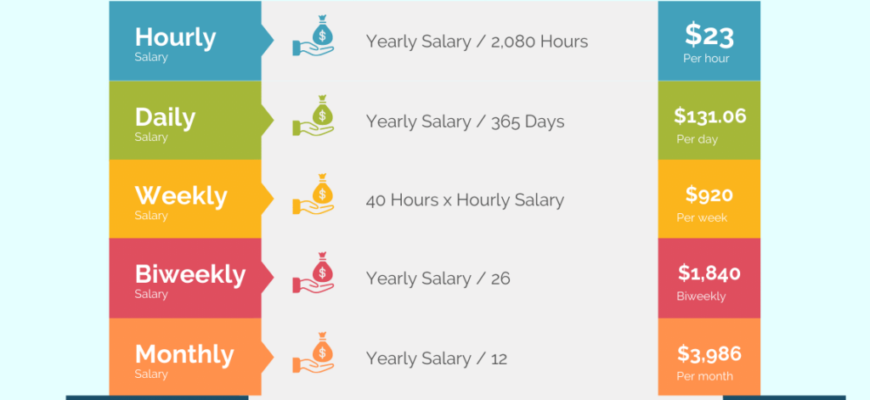
Before diving into post-tax calculations, it’s essential to know your gross annual income. Assuming a full-time job with 40 hours per week and 52 weeks a year, your yearly gross income with a $23 hourly rate is:
- Hourly Rate: $23
- Weekly Hours: 40
- Weeks per Year: 52
- Gross Annual Income: $23 x 40 x 52 = $47,840
Now that you have your gross income, the next step is to calculate your net income after taxes.
Understanding Your Tax Obligations
The amount of taxes you owe can vary greatly depending on your location. Federal, state, and local taxes can all impact your take-home pay. Here’s a general guide:
- Federal Tax Rates: These are progressive and depend on your overall income and filing status.
- State Tax Rates: These vary widely by state, with some states having no state income tax.
- FICA Taxes: Social Security and Medicare taxes usually total approximately 7.65% of your income.
Consult the IRS or a tax professional for the most accurate tax bracket information that applies to your specific situation.
Is $23 an Hour a Livable Wage?
Whether $23 an hour is a livable wage depends on your geographical location, lifestyle, and personal financial obligations. In some areas, $23 an hour may suffice for a comfortable lifestyle, while in costly metropolitan areas, it might just cover basic expenses.
Here are some factors to consider:
- Cost of Living: Higher in cities like New York, San Francisco, compared to rural areas.
- Debt Obligations: Student loans, mortgage, credit card debt.
- Family Size: More dependents generally increase costs.
Impact of Deductions and Benefits
Aside from taxes, deductions like health insurance, retirement contributions, and other benefits can also affect your net pay. Some common deductions include:
- 401(k) Contributions: Reduce taxable income, can vary based on your employer’s plan.
- Health Insurance Premiums: Often deducted pre-tax, affecting take-home pay.
- Union Dues: Applicable if you are part of a unionized workforce.
Budgeting with Your Take-Home Pay
Creating a budget based on your net pay is critical. Start by calculating your monthly take-home pay and then allocate funds to essential categories:
- Housing: 25-35% of your monthly income.
- Transportation: 10-15% of your income.
- Savings and Investments: Aim for at least 15%.
Ensure you leave room for unexpected expenses and discretionary spending.
Choosing Between Hourly and Salaried Employment
The choice between hourly and salaried employment often depends on career goals, lifestyle preferences, and industry standards. Here are some considerations:
- Control over Hours: Hourly jobs may offer more flexibility but less predictability.
- Overtime Pay: Usually applicable to hourly positions, can increase income.
- Job Security and Stability: Salaried positions often come with more benefits but less flexibility.
Using Online Calculators for Accurate Estimates
To simplify the computation process, consider using online tax calculators. These tools can help you calculate your post-tax earnings accurately by considering federal and state taxes, deductions, and other personal information.
Common Mistakes in Calculating Take-Home Pay
Avoid these mistakes when calculating your net income:
- Ignoring State Taxes: Different states have different tax obligations.
- Overlooking Deductions: Failing to include all your deductions skews results.
- Assuming Consistent Hours: Overtime or irregular hours can affect your total earnings.
Real-Life Examples and Case Studies
Jane and John both earn $23 an hour but live in different states and have different financial obligations. Let’s examine their yearly income after taxes and compare their lives:
| Aspect | Jane | John |
|---|---|---|
| State | California (High Income Tax) | Texas (No State Income Tax) |
| Gross Income | $47,840 | $47,840 |
| Net Income | $37,920 approximately | $41,040 approximately |
| Housing Costs | $1,500/month | $1,200/month |
This comparison highlights how the same hourly wage can lead to different lifestyle and financial situations due to taxes and living costs.
FAQs
$23 an hour amounts to $47,840 annually before taxes, assuming full-time employment of 40 hours per week.
How do I calculate my net income from my hourly wage?
Calculate your gross income then deduct taxes and other expenses like health insurance, retirement savings, and other deductions to get your net income.
Are there states where $23 an hour offers a better living standard?
Yes, states with lower income taxes or no state taxes, like Texas or Florida, might offer a better living standard compared to states with high taxes like California.
What online resources can help estimate annual take-home pay?
Many websites offer tax calculators, including the IRS’s withholding calculator and SmartAsset’s paycheck calculator.
What are the benefits of hourly jobs compared to salaried jobs?
Hourly jobs may offer more flexibility and potential for overtime pay, while salaried positions might provide better job security and benefits.
This article focuses on providing useful information while incorporating SEO strategies to attract search queries. By utilizing HTML formatting and a JSON-LD structured FAQPage, this piece is designed to appeal to both search engines and readers.