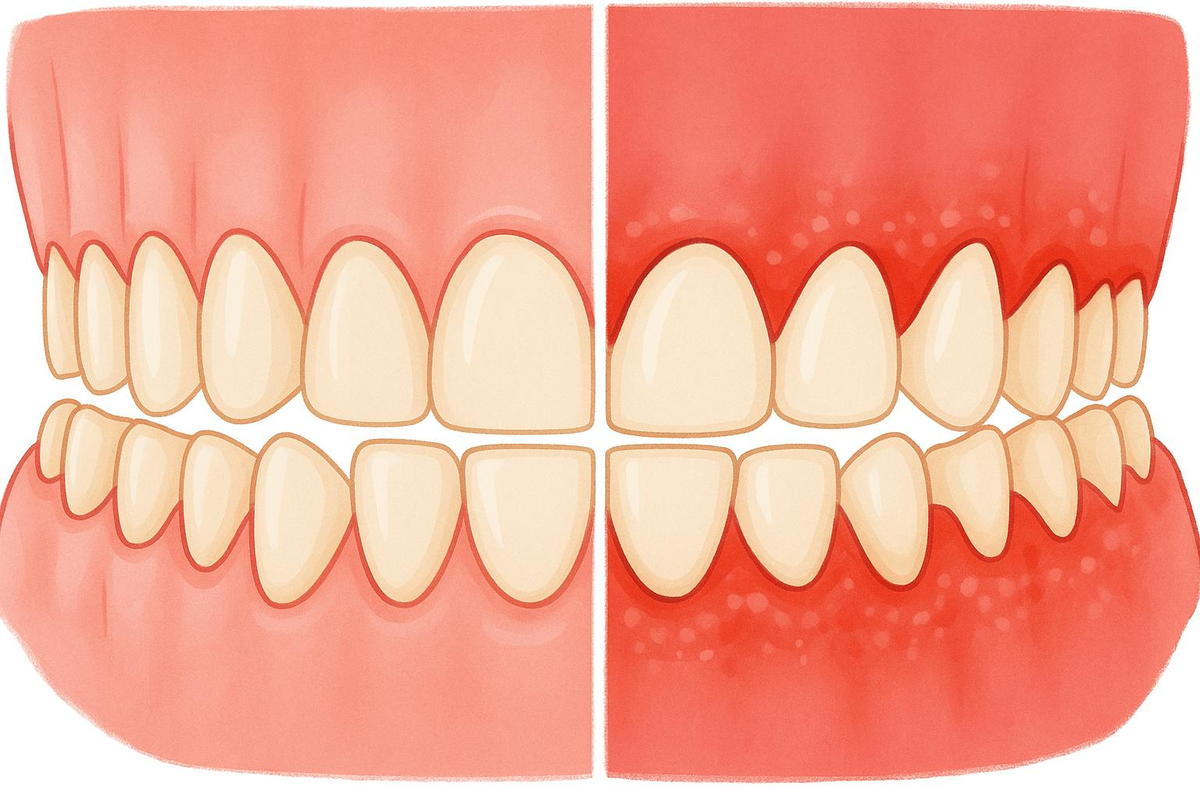
Gums bleed when flossing mostly from inflammation (gingivitis) caused by plaque. Regular flossing usually reduces it, and a dentist can help.
Why
Plaque buildup causes gingivitis, which inflames gums and makes them bleed.
Other causes
- Flossing too hard.
- Starting a new routine.
- Pregnancy hormones.
- Vitamin C or K deficiency.
- Blood thinners.
What to do
Keep flossing gently every day. Bleeding usually stops within 1 to 2 weeks.
Prevention
Brush twice a day for 2 minutes and floss once.
See a dentist
If bleeding lasts over 2 weeks.
Why gums bleed
Bleeding with flossing usually signals gingivitis, an inflammation caused by plaque along the gumline. Gingivitis affects a large share of adults, and the CDC estimates that nearly half of US adults over 30 have some form of periodontal disease. It is reversible with good oral hygiene, usually within 1 to 2 weeks.
- New flossing habits can cause bleeding at first, which typically stops in about a week of daily use.
- Aggressive flossing, hard-bristled brushes and vigorous brushing can injure gums.
- Pregnancy hormones, vitamin C or K deficiency, blood thinners and diabetes raise risk.
What to do
Brush twice daily for 2 minutes with a soft brush and fluoride toothpaste, floss daily gently in a C shape around each tooth, and see a dentist every 6 months. Professional cleaning removes tartar, which cannot be brushed off. See a dentist if bleeding persists beyond 2 weeks, gums recede, teeth loosen, or breath stays bad, which can signal periodontitis.
Why gums bleed
Bleeding when flossing usually reflects gingivitis, gum inflammation caused by plaque. Starting flossing after a long gap often causes bleeding that stops in a week or two of daily flossing. The CDC reports that nearly half of US adults over 30 have gum disease. Vitamin C deficiency, pregnancy, blood thinners and aggressive flossing can add to it.
What to do
Floss gently once daily, brush twice with fluoride toothpaste for two minutes and get professional cleanings every 6 months. See a dentist if bleeding persists beyond two weeks, or if gums are swollen, receding or teeth loosen.
Plaque biology
Plaque forms within hours after brushing and hardens into tartar in 24 to 72 hours. Gums bleed because inflamed capillaries rupture when disturbed. A 2013 review found daily interdental cleaning reduced gingivitis. Toothbrushes with soft bristles and a 45 degree angle to the gum line remove plaque best.
Risk and systemic links
Periodontal disease has associations with heart disease, diabetes, preterm birth and rheumatoid arthritis. Pregnancy gingivitis affects about 60 to 75 percent of pregnant women. Vitamin C deficiency (scurvy) causes bleeding gums. Blood thinners like warfarin increase bleeding. See a dentist if bleeding continues beyond 2 weeks of better hygiene.
Based on data from the American Academy of Periodontology and the American Dental Association