Crime has many causes, including poverty, inequality, lack of education or opportunity, substance abuse, and social factors.
Causes
- Poverty and inequality.
- Lack of education and jobs.
- Substance abuse.
- Social disorganization.
- Weak family or community ties.
- Exposure to violence.
- Lead exposure and brain development.
Theories
Strain theory, social learning and routine activity.
Prevention
Education, jobs, community programs and policing.
Note
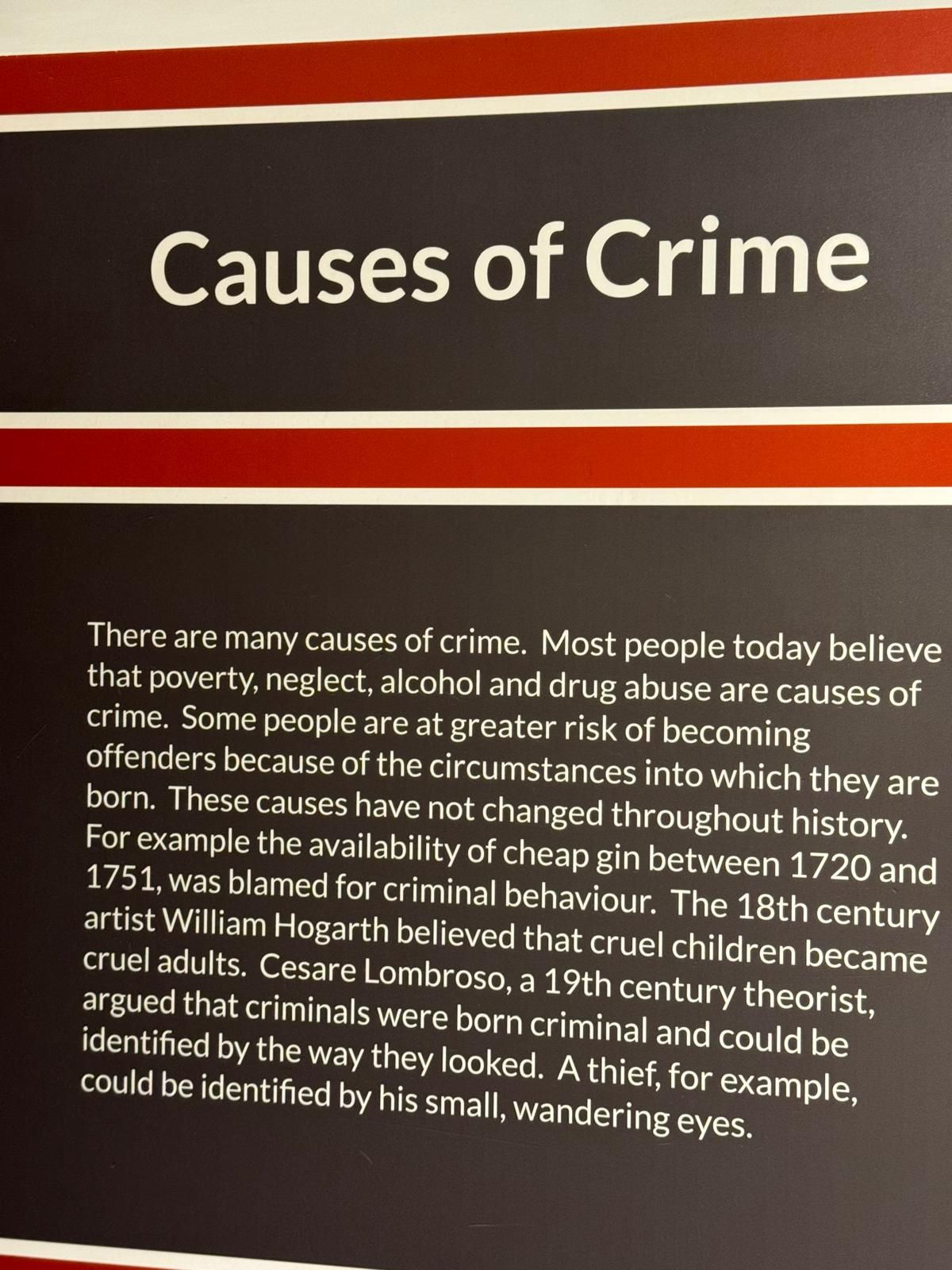
No single cause explains crime.
Established risk factors
Criminology identifies causes at several levels. Individual factors include early aggression, low self-control, substance abuse, exposure to violence and lead exposure in childhood. Social factors include poverty and concentrated disadvantage, weak community ties, unemployment, access to firearms and peer influence.
- A 2001 study by Jessica Wolpaw Reyes linked reductions in childhood lead exposure to part of the drop in violent crime in the 1990s.
- Hot spots policing research shows that a small share of places, often about 5 percent of street segments, account for roughly 50 percent of crime.
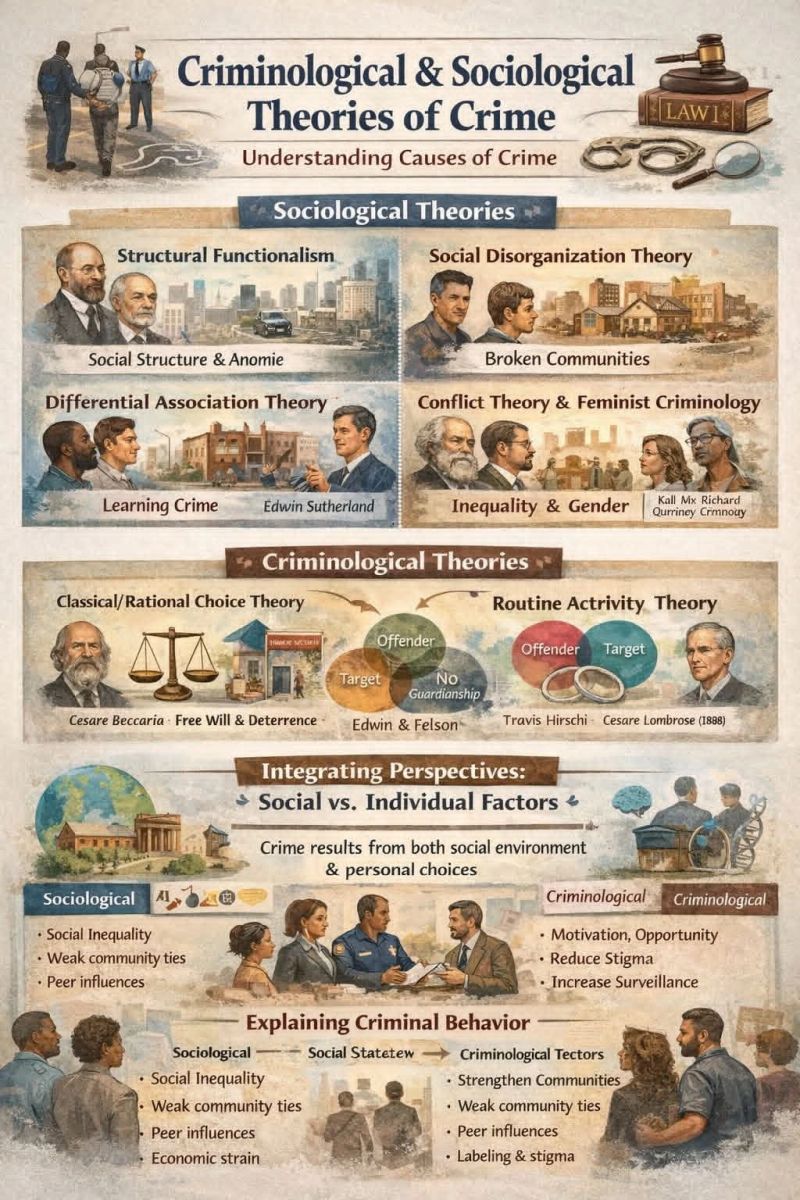
- Strain theory (Merton), social learning theory (Sutherland) and routine activity theory (Cohen and Felson) are major explanations.
Prevention evidence
Programs with evidence include early childhood programs such as Perry Preschool, cognitive behavioral therapy for at-risk youth, summer jobs programs, better street lighting (a New York trial found about 36 percent fewer outdoor nighttime crimes) and cleaning vacant lots. No single cause explains crime, and effects differ by type.
Established risk factors
Criminology identifies risk factors including poverty, concentrated disadvantage, weak social ties, substance use, early childhood adversity, availability of weapons and opportunity. No single cause explains crime.
Prevention evidence
Evidence supports early childhood programs, cognitive behavioral therapy, hot spot policing and improved lighting and green spaces. Crime rates differ widely by place and time.
Social and economic factors
Criminologists point to several correlated factors rather than a single cause: concentrated poverty, unemployment, income inequality, weak school attachment, neighborhood disadvantage, easy access to firearms, and exposure to violence in childhood. Strain theory, social disorganization theory and routine activity theory are major frameworks. Individual factors include impulsivity, substance use and association with offending peers.

Evidence on prevention
Research shows that early childhood programs, such as the Perry Preschool Project, reduce later crime, and that hot spot policing and improved street lighting lower offenses in targeted places. Cognitive behavioral therapy and stable employment support reentry. Lead exposure has been studied as a contributor to violence. Crime rates also change with age, with the peak of offending in late adolescence. Correlation does not prove cause.
Based on data from the US Bureau of Justice Statistics and the National Institute of Justice