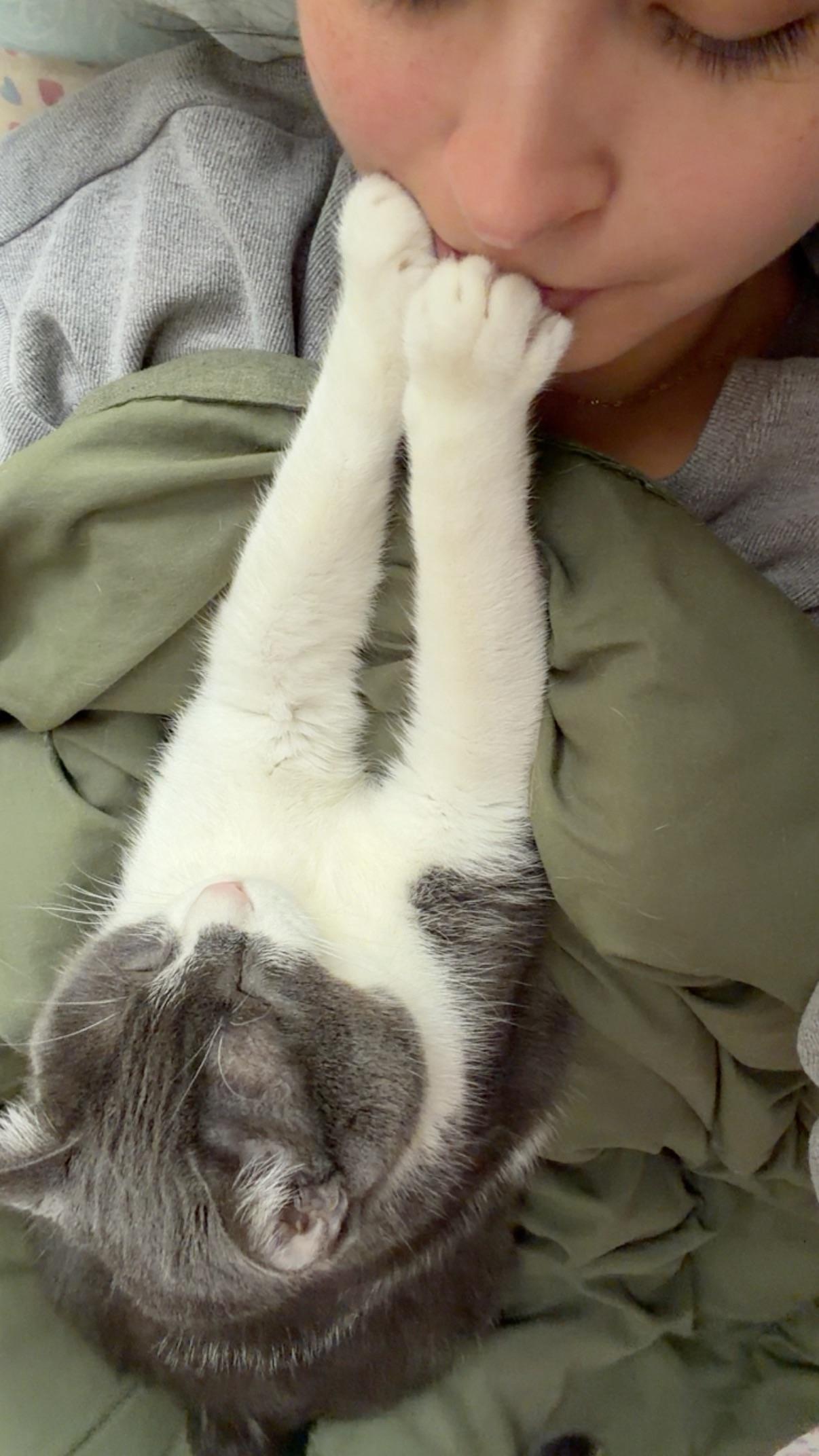
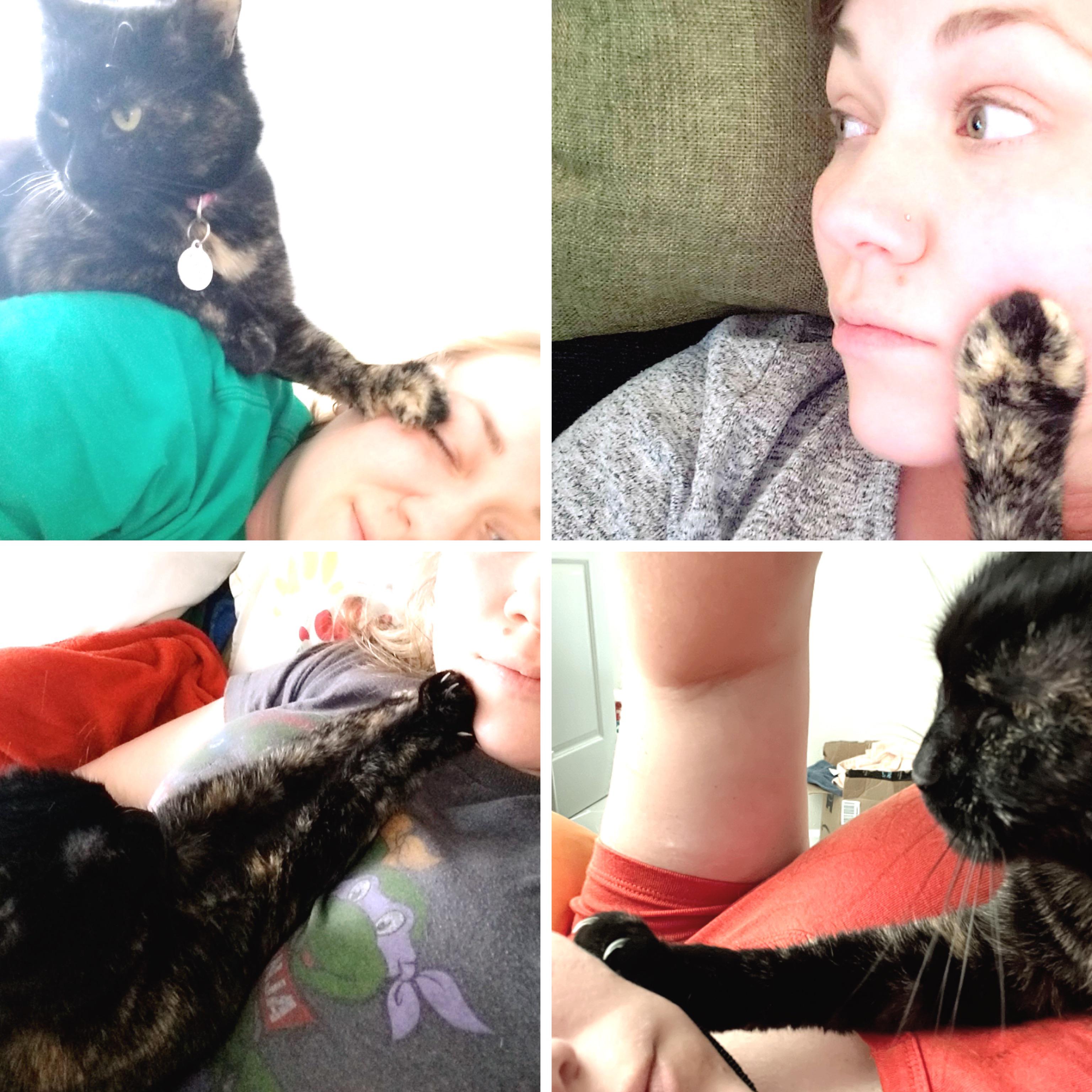
Cats put a paw on your face to wake you, get attention, show affection, or mark you with scent.
Reasons
- Wanting attention or food.
- Affection.
- Scent marking.
- Waking you up.
- Seeking warmth.
Tip
Gently move the paw and set a feeding routine.
Body language
A soft touch with claws in is gentle.
Boundary
Don’t reward early wakeups.
Behaviors behind the paw
Cats use their paws to knead and touch, which comes from kittenhood when nursing kittens pressed on the mother to stimulate milk flow. The gesture can mean affection, a request for attention or food, or a nudge to wake you. Paws have scent glands between the pads, so touching you also marks you with the cat’s scent.
- A gentle paw with claws in on the face usually signals trust.
- A paw at 5 a.m. may be learned, as cats repeat behaviors that get food or attention.
- A paw with claws out or hard swats can indicate overstimulation or play.
How to respond
Do not reward early-morning paws with food. Set an automatic feeder, give an evening play session of 10 to 15 minutes and a meal afterward, which mimics the hunt, eat, groom, sleep cycle. Keep nails trimmed. If the cat suddenly starts pawing more with changes in appetite, weight or thirst, check with a vet, since conditions like hyperthyroidism and diabetes change behavior.
What the paw means
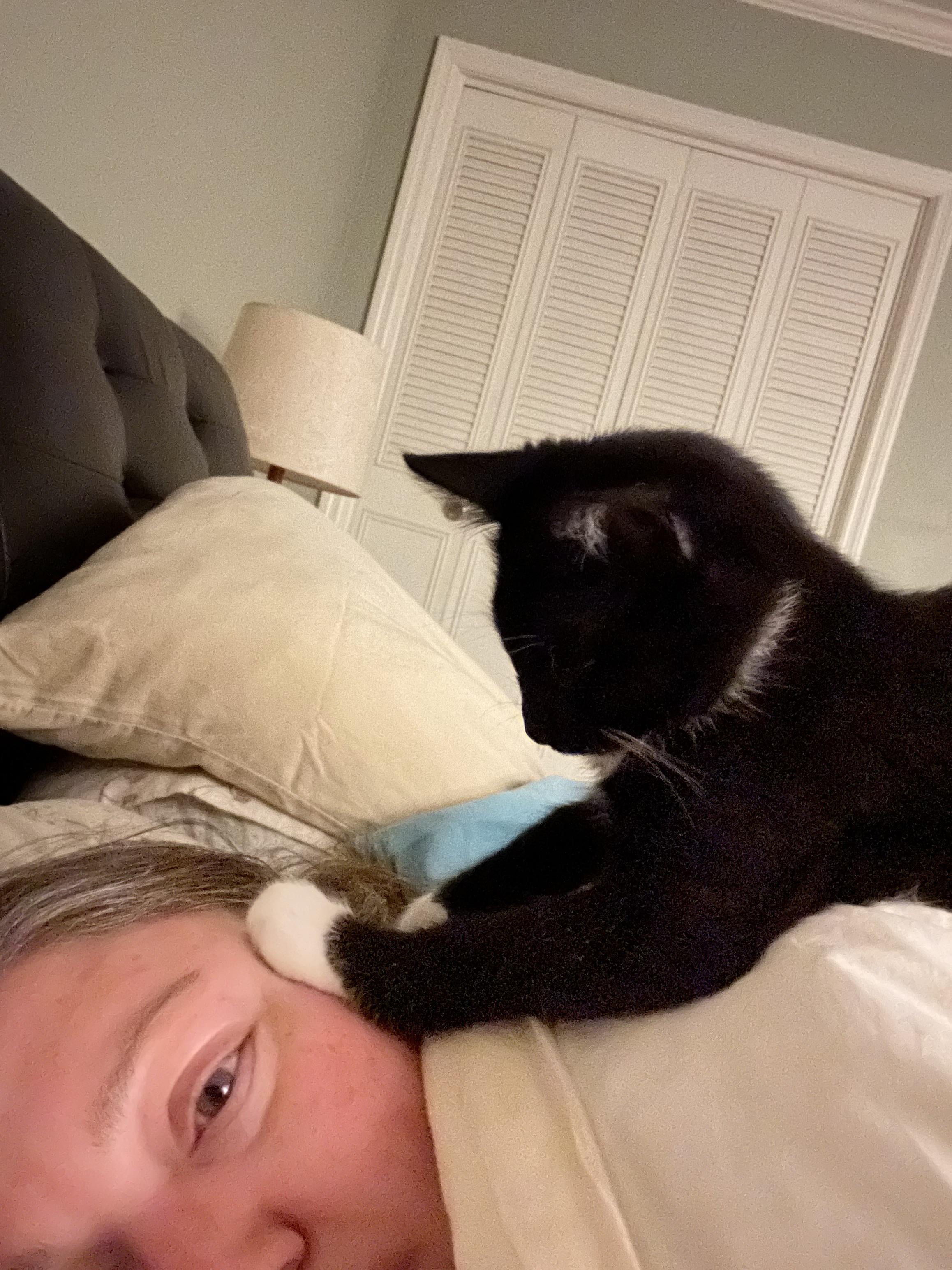
Cats may touch your face to wake you, ask for food, get attention or show affection. Kneading and paw touches come from kitten behavior used to stimulate milk flow. Cats also have scent glands in their paws that mark you as part of their group.
How to respond
If it happens at night, avoid rewarding it by feeding or petting, and set a feeding schedule. Play with the cat before bed. Keep nails trimmed. If paw patting is new or comes with hiding or vocalizing, a vet check can rule out pain or thyroid disease, which is common in older cats.
Signals in cat language
A paw on the face often means a request. Cats learn that waking a human leads to food. Slow blinking and head bunting signal trust. A paw with claws extended is a different warning, and a paw tap during play is invitation.
Handling and health
Do not punish; redirect with play. Maintain a feeding schedule with an automatic feeder to avoid dawn demands. Cats older than 10 who start waking and crying at night may have hyperthyroidism, kidney disease, high blood pressure or cognitive dysfunction. Ask a vet for blood and blood pressure tests.
Based on data from Cornell Feline Health Center and the American Association of Feline Practitioners