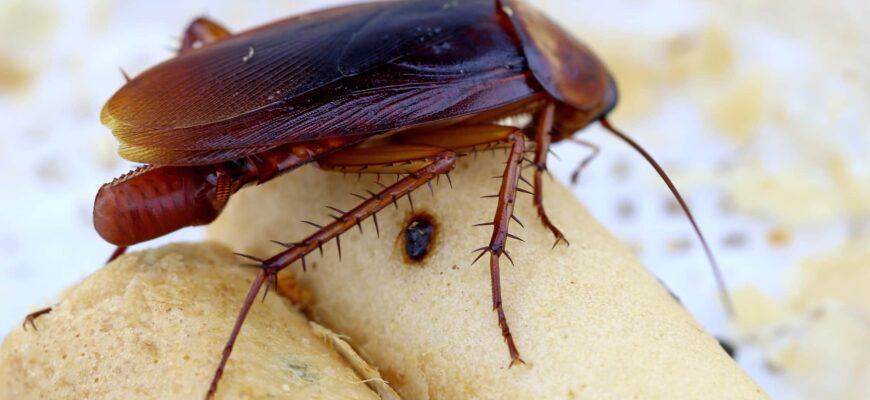
Roaches die on their backs because poison or illness affects their nervous system, and they struggle to flip back over.
Why
- Insecticides disrupt the nervous system, causing paralysis. They flip over and can’t right themselves.
- Their legs curl up as they dry out.
Also
Dehydration and old age can have the same effect.
What it means
A roach on its back is dying or already dead. If they keep appearing, you have an infestation.
Cleanup
Remove dead roaches, since they can trigger allergies and asthma.
Control
Seal cracks, remove food and use bait.
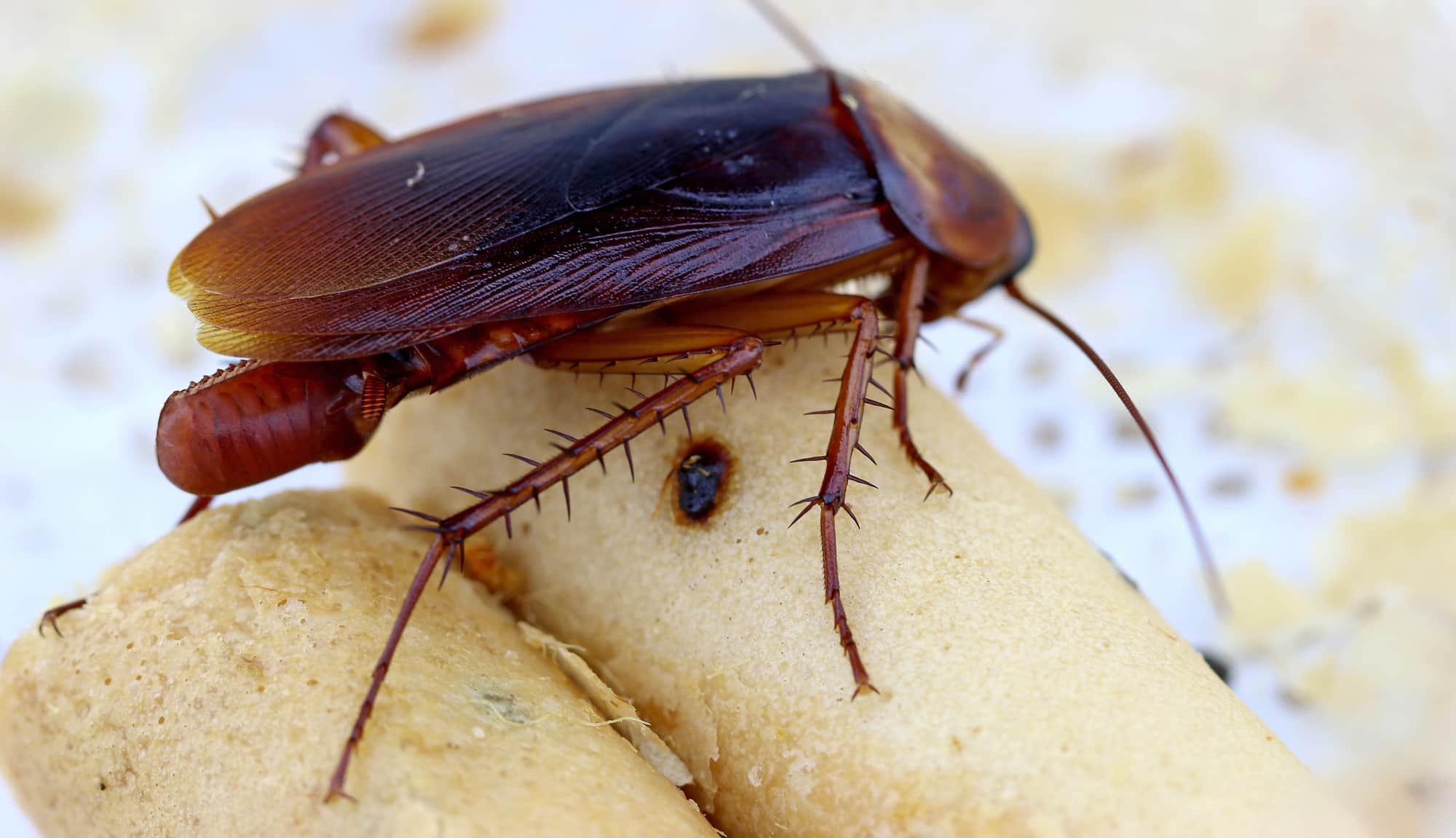
Insecticide effect
Cockroaches die on their backs after being poisoned by insecticides or baits. The chemicals attack the nervous system, causing loss of coordination and tremors. The roach loses motor control and flips over.
Why they cannot flip back
A cockroach’s body is flattened, with a rounded back and weak legs relative to its shape. When poisoned, muscle control fails and it cannot right itself. Healthy roaches can flip over quickly using their legs and wings.
Other reasons
- Dehydration or starvation.
- Old age, since the adults of many species live only months to a year.
- Disease or infection.
- Cold exposure.
- Leg injury.
What it means
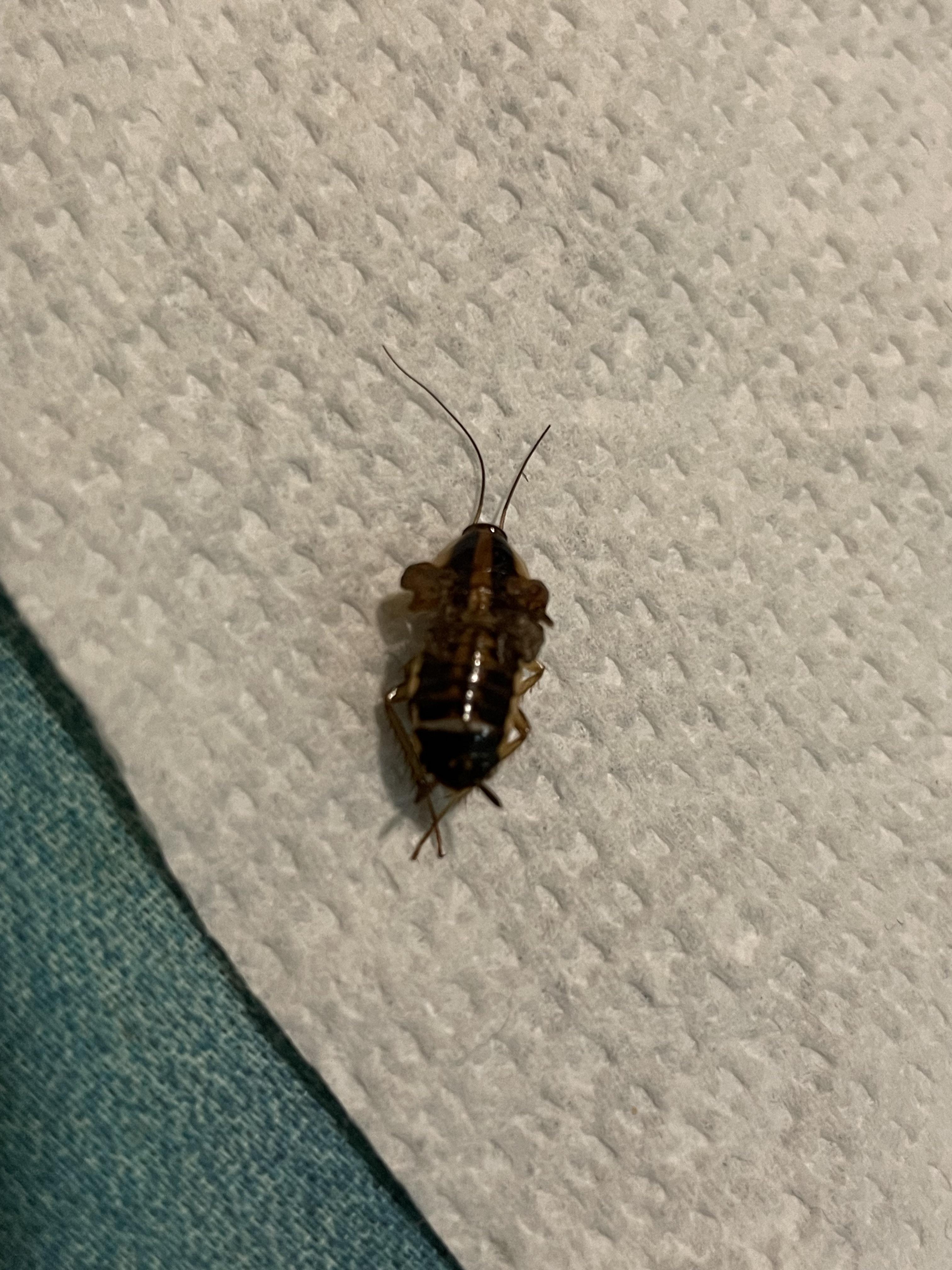
Seeing dead roaches on their backs usually indicates that treatments are working, but it can also indicate that living roaches are nearby. Dying roaches can crawl out into the open before dying.
Cleanup
Wear gloves, pick them up with a paper towel or vacuum, seal in a bag and discard. Wash hands. Dead roaches can spread allergens that trigger asthma. Clean surfaces with soap and water.
Control
- Seal cracks and entry points.
- Fix leaks and reduce moisture.
- Store food in sealed containers, and clean crumbs.
- Use gel baits, boric acid or insect growth regulators.
- Call a professional for infestations.
Pet and child safety
Keep pesticides and baits out of reach of children and pets. Dogs and cats can get sick from eating poisoned roaches.
Numbers
There are about 4,600 species of cockroaches, with only about 30 species considered pests. The German cockroach is the most common household pest.
Why roaches end up on their backs
Roaches exposed to insecticides suffer nerve damage and lose coordination, and their rounded shape and weak leg muscles make righting themselves difficult. Neurotoxic poisons such as pyrethroids and fipronil cause tremors and paralysis. Dying roaches on their backs often indicate a nearby infestation, and the number seen is usually only a small portion of the actual population.

Cleanup and control
The American cockroach grows to about 1.6 inches, and the German cockroach is smaller, about 0.5 inches, and breeds fast: a female produces egg cases of up to 30 to 40 eggs. Cockroach allergens can trigger asthma, especially in children. Seal cracks, fix leaks, store food in sealed containers, and use gel baits or a licensed pest professional. Wear gloves when disposing of dead roaches.
Based on data from the US Environmental Protection Agency and the National Pest Management Association