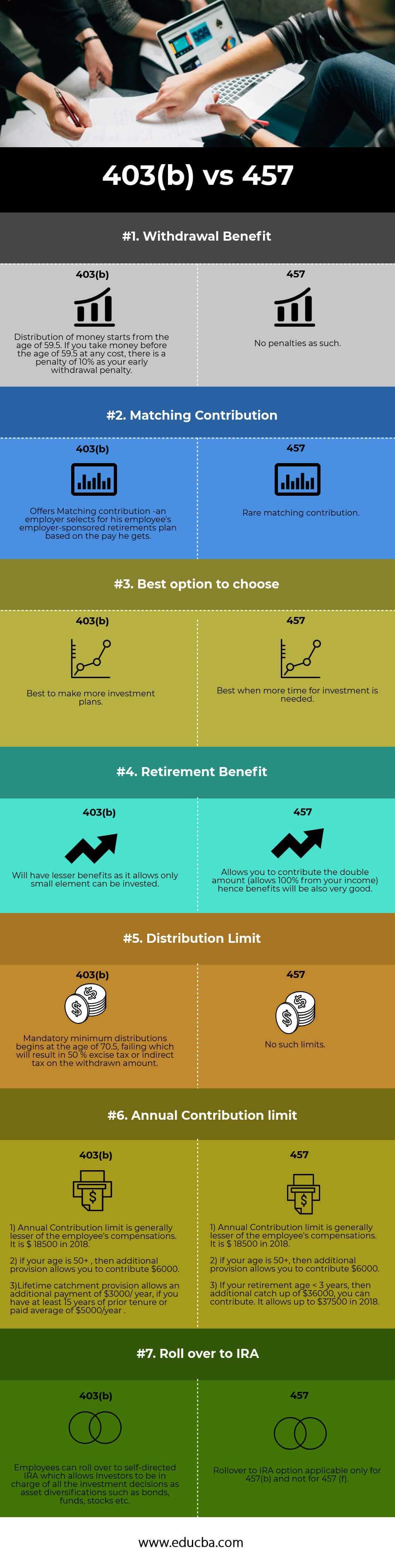
A 403(b) is for public schools and nonprofits, while a 457(b) is for state and local governments and some nonprofits. A 457(b) has no early withdrawal penalty.
403(b)
For employees of public schools, universities and 501(c)(3) nonprofits.
457(b)
For state and local government workers and some nonprofits.
Limits
For 2025, the employee contribution limit is $23,500 for both. Age 50 and older can add $7,500.
Key difference
457(b) withdrawals after leaving the job have no 10% early penalty (governmental plans).
Both
You can contribute to both and double the limit.
Choice
Choose by employer.
Contribution limits and rules
For 2025, the employee elective deferral limit is 23,500 USD for both 403(b) and 457(b) plans, with an additional 7,500 USD catch-up for age 50 and older. Ages 60 to 63 can contribute a higher catch-up of 11,250 USD under SECURE 2.0.

- 403(b) plans are offered by public schools, tax-exempt organizations and churches. 457(b) plans are offered by state and local governments and some nonprofits.
- 457(b) withdrawals after leaving the employer are not subject to the 10 percent early withdrawal penalty (governmental plans), though ordinary income tax applies. A 403(b) typically carries the 10 percent penalty before age 59 and a half.
- 457(b) plans offer a special catch-up in the three years before normal retirement age.
Using both
Because the limits are separate, an employee eligible for both can contribute up to the limit to each, which can double tax-deferred savings. 403(b) plans often include annuities and mutual funds, and fees vary, so compare costs. Rollovers between the plans and IRAs are allowed. This is general information, and a tax professional can advise on individual cases.
Contribution limits and rules
Both plans are tax advantaged retirement plans. 403(b) plans serve public schools and 501(c)(3) nonprofits and 457(b) plans serve state and local government employees and some nonprofits. The elective deferral limit for 2025 is 23,500 USD for both, with a catch up of 7,500 USD for those 50 and older. The 457(b) has no 10 percent early withdrawal penalty on distributions after leaving the employer.
Using both
Eligible employees can contribute the maximum to a 403(b) and a 457(b) at the same time, effectively doubling savings. Check plan details for fees and investment options.
Plan sponsors and fees
403(b) plans often invest in annuities or mutual funds, and some carry higher fees, with average expense ratios around 1 percent higher than 401(k). 457(b) plans for government employees allow loans in some plans and have a special catch up in the last three years before normal retirement age, allowing up to double the annual limit.

Distributions and strategy
403(b) withdrawals before age 59 and a half face a 10 percent penalty, with exceptions. 457(b) governmental plan withdrawals after separation from service avoid the penalty. Rollovers into IRAs are allowed. Compare the plan’s fees, match and fund choices, and prioritize match first.
Based on data from the Internal Revenue Service and the Employee Benefit Research Institute