- How Much Does a Soccer Player Run in a Game?
- Average Distance Covered by Soccer Players
- Distance Covered by Position
- The Impact of Playing Style and Tactics
- Why Endurance Matters in Soccer
- Technological Advances in Tracking Player Movement
- Factors Affecting Individual Running Distances
- Training Regimens for Soccer Players
- Comparing Soccer Running Distances to Other Sports
- Common Mistakes in Estimating Running Distances
- Conclusion
- Frequently Asked Questions
How Much Does a Soccer Player Run in a Game?
In the world of soccer, the physical demands placed on players are intense. One of the most often asked questions is: “How much does a soccer player run in a game?” Understanding the distances players cover can offer insights into their endurance and fitness levels. This article seeks to answer this query in depth while exploring related questions and providing a comprehensive overview of a soccer player’s movement during a match.
Average Distance Covered by Soccer Players
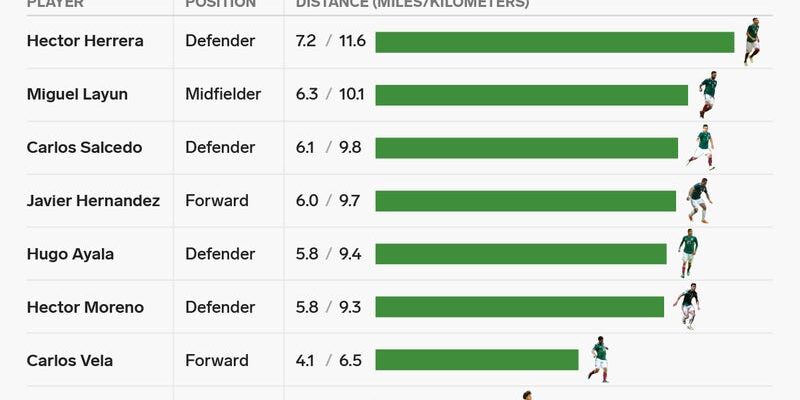
The distance a soccer player covers varies by position, style of play, and the level of competition. On average, outfield players run between 10 to 13 kilometers (approximately 6.2 to 8 miles) per game. Midfielders tend to cover the most ground, as they are involved in both offensive and defensive plays, while attackers and defenders run slightly less.
Distance Covered by Position
- Midfielders: Midfielders generally run the most, taking on both defensive and attacking responsibilities. They typically cover 11 to 13 kilometers per game.
- Defenders: Center-backs may run less due to their more stationary roles, covering around 9 to 11 kilometers. Full-backs, with their responsibilities to assist in wide midfield areas, can run similar distances to midfielders.
- Forwards: Strikers and wingers usually cover between 9 and 11 kilometers, focusing their efforts on short, explosive bursts of speed.
- Goalkeepers: Goalkeepers run the least, with an average covering distance of 1 to 3 kilometers due to their primary role within the penalty box.
The Impact of Playing Style and Tactics
Team tactics and playing style significantly impact how much players run. High-pressing teams require their players to cover more ground to close down opponents quickly, while teams that prefer a more defensive setup may see players running less but maintaining intense bursts during counter-attacks.
Why Endurance Matters in Soccer
Endurance in soccer is crucial as it directly affects a player’s performance. The ability to maintain high intensity throughout the match can often be the difference between winning and losing. This attribute helps in making efficient runs off the ball, executing defensive duties, and sustained involvement in offensive plays.
Technological Advances in Tracking Player Movement
Modern technology, such as GPS trackers and advanced analytics, allows coaches and analysts to track and monitor players’ movements precisely. These tools provide data on not only the distance covered but also the intensity and pace of runs.
Factors Affecting Individual Running Distances
Several factors can influence the distance an individual player runs in a game, including fitness level, individual playing style, and match dynamics. Substitutions, for example, can allow players to exert more energy over shorter periods.
Training Regimens for Soccer Players
A typical soccer training regimen includes aerobic and anaerobic exercises to build endurance and strength. Interval and continuous running, combined with drills mimicking match conditions, help players adapt to the demands of a game environment.
Comparing Soccer Running Distances to Other Sports
Soccer players are often compared to athletes from sports such as basketball and football in terms of distances covered. While the running styles and intensities differ, soccer players generally cover more ground due to the continuous and expansive nature of the game.
Common Mistakes in Estimating Running Distances
While stat trackers are increasingly accurate, estimates can still be mistaken due to factors like inconsistent data sampling and the misinterpretation of movement as active play. Understanding the context of each player’s movement is critical.
Conclusion
Understanding how much soccer players run in a game gives a deeper appreciation for the physical demands of the sport. Their stamina and fitness are essential components in delivering elite performances. Monitoring these distances offers valuable insights into both player performance and overall team strategies.
Frequently Asked Questions
- How much does a professional soccer player run on average in a game?
Professional soccer players run between 10 to 13 kilometers on average per game, depending on their position and style of play.
- Do goalkeepers run as much as outfield players?
No, goalkeepers typically run much less, averaging between 1 to 3 kilometers per game.
- How do tactics affect player running distances?
Tactics such as pressing and counter-attacking can significantly increase the distances players cover due to changes in intensity and movement patterns.
- What technology is used to track running distances in soccer?
GPS trackers and advanced analytics are commonly used to monitor player movements, providing accurate data on distances covered and intensity levels.
- Can an amateur player expect to run as much as a professional during a match?
Amateur players usually cover less distance compared to professionals due to differences in fitness, match intensity, and tactical understanding.