Optical fiber carries data as pulses of light through thin glass strands, reflecting along the core by total internal reflection.
How it works
Light pulses travel down a glass core by total internal reflection. The cladding around the core has a lower refractive index and keeps light inside.
Parts
Core (8 to 62.5 microns), cladding and coating.
Types
Single mode (long distances) and multimode (short distances).
Speed
Light travels at roughly two thirds of the speed of light in a vacuum. Fiber can carry over 100 Tbps per strand with advanced technology.
Advantages
High speed, long distance and no electrical interference.
Light as a signal
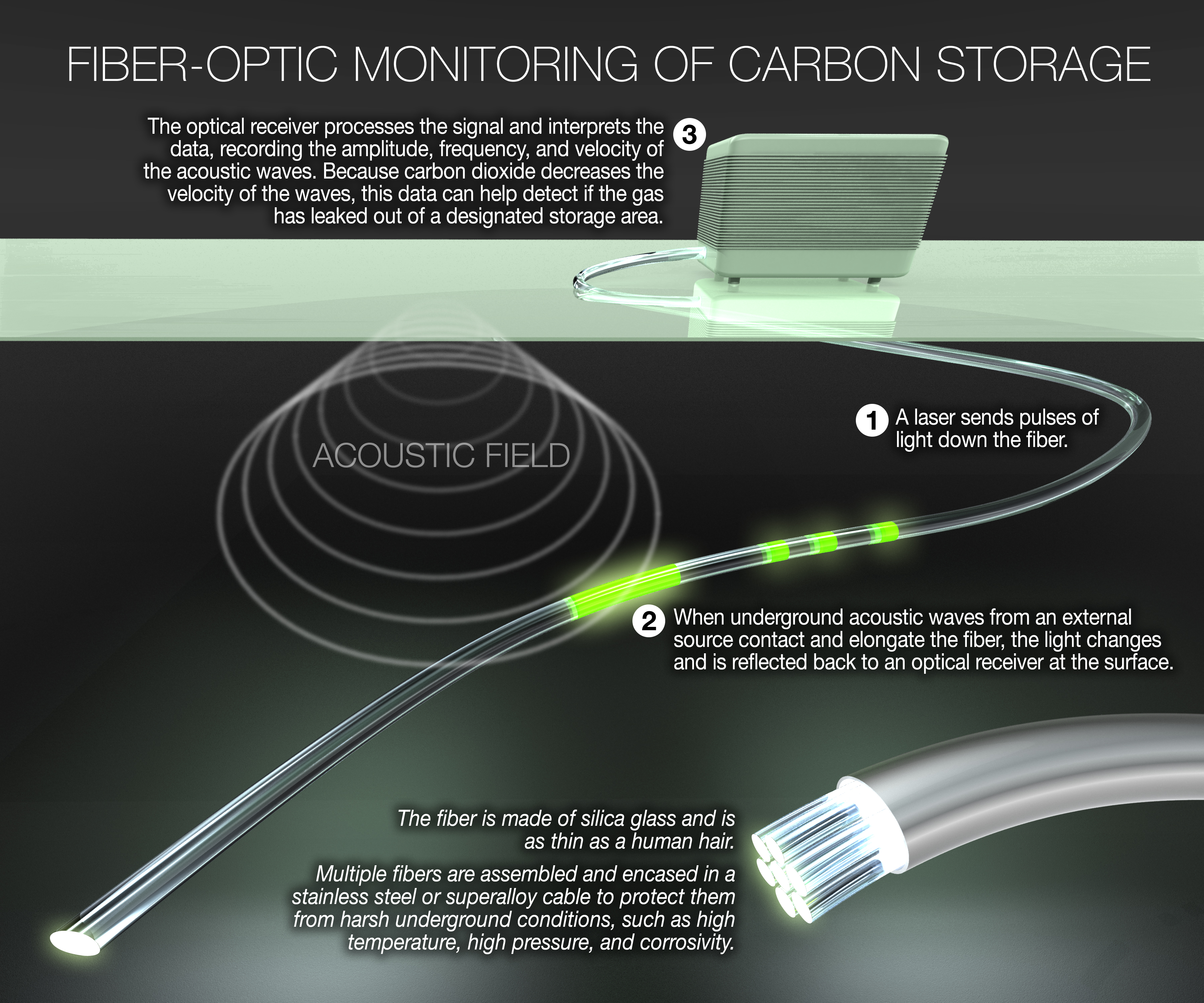
Optical fibers carry information as pulses of light, produced by lasers or LEDs. A transmitter converts electrical data into light pulses, and a receiver at the other end turns them back into electrical signals.
Core and cladding
A glass fiber has a very thin core, about 9 micrometers wide for single mode fibers and 50 or 62.5 for multimode, surrounded by cladding with a lower refractive index. Light stays inside the core by total internal reflection. A protective coating and jacket surround the fiber. A human hair is about 70 micrometers wide.
Single mode and multimode
- Single mode fiber carries one light path, used for long distances (tens to hundreds of kilometers) such as undersea cables and telecom networks.
- Multimode fiber carries multiple modes and is used for shorter distances such as inside buildings or data centers.
Speed
Light in fiber travels at about two thirds of the speed of light in vacuum, about 200,000 kilometers per second. Commercial systems carry multiple wavelengths (wavelength division multiplexing), with total capacities of tens of terabits per second per fiber. In 2022, Japanese researchers reported 1.02 petabits per second over 51.7 kilometers in a lab test.

Signal loss
Modern fiber loses about 0.2 decibels per kilometer, so signals need amplification (erbium doped fiber amplifiers) every 50 to 100 kilometers in long haul cables.
Undersea cables
More than 95% of international data traffic travels through about 500 undersea cables, according to the International Cable Protection Committee.
Advantages over copper
Higher bandwidth, lower loss, immunity to electromagnetic interference, lighter weight and better security.
Home service
Fiber to the home (FTTH) can provide gigabit speeds or faster.
History
Charles Kao proposed using glass fibers for communications in 1966 and won the Nobel Prize in Physics in 2009.
How light travels through glass
Light in a fiber stays inside the core by total internal reflection, because the cladding has a lower refractive index than the core. Light is usually infrared at 850, 1310 or 1550 nanometers, the wavelengths where glass is most transparent. Attenuation in modern single mode fiber is about 0.2 decibels per kilometer at 1550 nm, so signals can travel tens of kilometers before needing amplification.

Capacity and uses
A single fiber can carry terabits per second using wavelength division multiplexing, which sends many colors of light on one strand. Over 95 percent of intercontinental data traffic travels through submarine cables, with more than 500 active systems worldwide. Fiber to the home plans commonly offer 500 Mbps to 5 Gbps. Light in glass travels at about two thirds the speed of light in vacuum, roughly 200,000 km per second.
Based on data from the International Telecommunication Union and TeleGeography