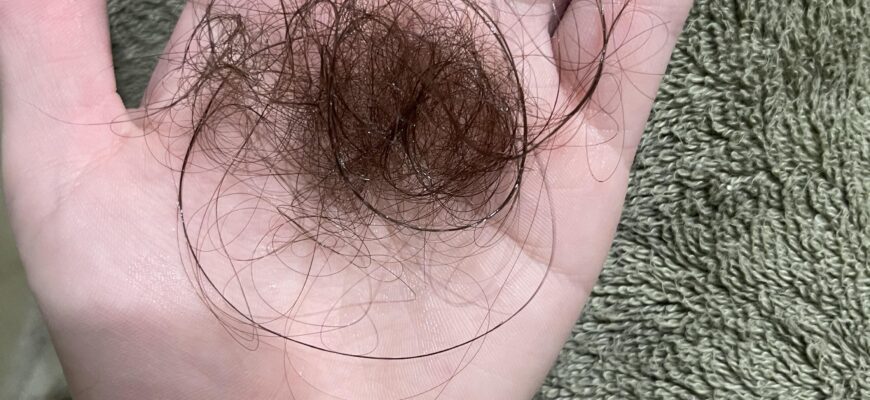
Losing 50 to 100 hairs a day is normal, including in the shower. See a doctor if shedding increases a lot.
Normal
Losing 50 to 100 hairs a day is normal. Hair loss in the shower looks bigger because the hair collects.
Why
Hair sheds as part of its growth cycle.
Causes of excess shedding
- Telogen effluvium after stress, illness or childbirth.
- Thyroid issues.
- Iron deficiency.
- Medications.
- Genetics.
See a doctor

If you see thin patches, widening part or shedding over 3 months.
Normal shedding numbers
People lose about 50 to 100 hairs per day, and hair in the shower often looks like more because strands that fell during the day collect at washing. Each follicle goes through anagen (growth, 2 to 7 years), catagen (transition, about 2 weeks) and telogen (rest, about 3 months). About 85 to 90 percent of hairs are in the growth phase at any time.
- Long hair makes shedding look larger.
- A wash after skipping a day or two can bring out 150 or more hairs.
- Telogen effluvium is increased shedding of up to 300 hairs per day, typically 2 to 3 months after fever, surgery, childbirth, crash dieting or major stress.
When to see a doctor

Patchy loss, a widening part, thinning at the temples, scalp itching or scaling, and loss with fatigue or weight change need evaluation. Tests may include ferritin, thyroid hormone and vitamin D. Androgenetic alopecia affects about 50 percent of men by age 50 and a significant share of women. Treatments with evidence include minoxidil and finasteride (men only, in most guidance).
Normal shedding numbers
The American Academy of Dermatology says it is normal to lose 50 to 100 hairs a day, and more may show up when washing because hairs that have already shed collect in the drain. The scalp has about 100,000 follicles on average. Hair grows about 1 cm a month, and each follicle cycles through growth (anagen, 2 to 7 years), transition and rest (telogen, about 3 months).
When to see a doctor
Seek advice for sudden heavy shedding, patchy bald spots, a widening part, scalp pain or redness. Telogen effluvium follows stress, illness, childbirth, crash dieting or surgery, appearing about 2 to 3 months later and usually recovering within 6 months. Causes include thyroid disease, iron deficiency, hormonal changes and medicines. Minoxidil and finasteride treat pattern hair loss.
Hair cycle numbers
About 90 percent of scalp hairs are in the growth phase at any time. Washing, brushing and styling dislodge hairs already in the resting phase. Women who wash every 3 days may see 250 or more hairs in the drain at once because accumulated shedding is released.

Causes of increased loss
Telogen effluvium after fever, childbirth (up to 50 percent of women see postpartum shedding), surgery or crash dieting. Iron deficiency, thyroid disease, lupus, alopecia areata and medicines such as isotretinoin, blood thinners and beta blockers also matter. A pull test and blood tests help. Most shedding stops within 6 months once the trigger resolves.
Based on data from the American Academy of Dermatology and the NIH