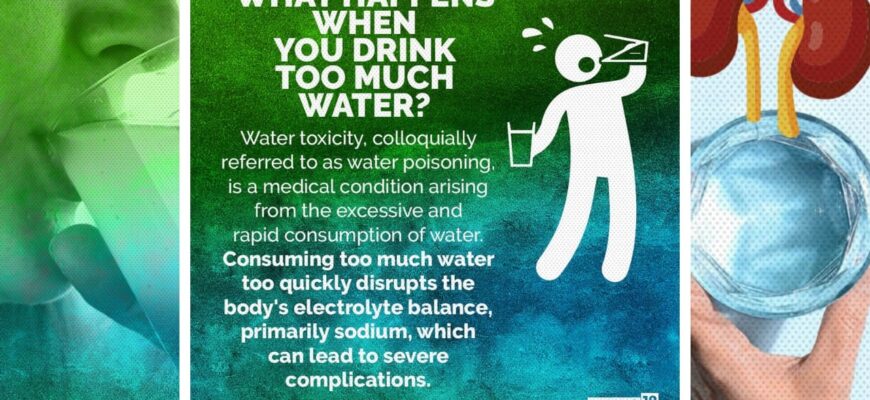
Drinking too much water can dilute sodium in the blood (hyponatremia), causing headaches, nausea, confusion, and in severe cases seizures.
Hyponatremia
Overdrinking water dilutes blood sodium below 135 mEq/L.
Symptoms
Nausea, headache, confusion, muscle cramps, seizures and, in severe cases, coma.
How much is too much
The kidneys can process about 0.8 to 1 liter per hour. Drinking much more than that can be dangerous.
At risk
Endurance athletes, people with kidney disease and some psychiatric conditions.

Emergency
Call 911 for confusion or seizures.
Water intake figures
Hyponatremia occurs when blood sodium falls below 135 mmol/L. Healthy kidneys excrete up to about 0.8 to 1.0 liters of water per hour, so drinking much more than that in a short time can overwhelm them. The National Academies suggest about 3.7 liters of total water daily for men and 2.7 liters for women, including food, but needs vary with heat and exercise.
- Early symptoms include nausea, headache, bloating and confusion.
- Severe cases cause seizures, swelling of the brain and coma. Sodium below 120 mmol/L is dangerous.
- Marathon studies, including a 2005 New England Journal of Medicine study of Boston Marathon runners, found about 13 percent had hyponatremia.
- Water-drinking contests have caused deaths, as in the 2007 radio contest case in California.
Who is at higher risk
Endurance athletes, people with kidney, heart or liver disease, and users of some drugs such as MDMA, diuretics or SSRIs face higher risk. Infants given too much plain water can develop seizures. Pale clear urine most of the day suggests intake is adequate or more than needed. Treatment of severe cases uses hypertonic saline in a hospital.
Intake numbers
The National Academies suggest total water intake of about 3.7 liters a day for men and 2.7 liters for women, including food. Hyponatremia (low blood sodium) can occur when drinking more than the kidneys can excrete, which is about 0.8 to 1.0 liter per hour. Symptoms are headache, nausea, confusion, seizures and coma.
Risk groups
Endurance athletes, people with certain medical conditions, those on some medicines and infants are at higher risk. Drink to thirst. Seek emergency help for confusion or seizures.
Hyponatremia details
Normal blood sodium is 135 to 145 mmol/L. Water intoxication lowers it below 135, causing swelling of brain cells. Cases are documented in marathon runners, military trainees, water drinking contests and psychiatric patients with compulsive drinking. In the 2002 Boston Marathon study, 13 percent of runners tested had hyponatremia.
Prevention
Drink to thirst rather than on a schedule. Pale urine indicates adequacy. During endurance events, include sodium in sports drinks and avoid drinking more than you lose. Treatment of severe hyponatremia in hospital uses hypertonic saline. Symptoms such as headache, nausea and confusion need prompt medical care.
Based on data from the New England Journal of Medicine and the Mayo Clinic